Introduction
Seventy-eight percent of family caregivers actively provide or arrange transportation for elderly loved ones, a burden that grows heavier as care needs escalate. What begins as occasional rides to doctor appointments can quickly become a second full-time job, disrupting work schedules and creating real anxiety about a loved one's safety on the road.
That anxiety points to a deeper problem. Families deserve to feel confident, not fearful, when entrusting a senior to a transportation provider. Yet for many caregivers, that confidence is hard to come by.
The health consequences of unreliable transport are measurable. Seniors who lose consistent access to rides face 34% increased emergency department use and 30% higher all-cause mortality, driven by delayed care and unmanaged chronic conditions. Social isolation compounds the risk further, increasing mortality by 26% to 32% when seniors lose access to faith communities, family gatherings, and everyday activities.
This guide walks caregivers through why senior transportation deserves immediate attention, the warning signs that informal arrangements are breaking down, the full spectrum of services available (from ADA paratransit to specialized non-emergency medical transport), how to evaluate providers rigorously, and where to find vetted local resources.
TLDR
- Reliable transportation prevents missed medical appointments, social isolation, and premature long-term care placement
- Main options: ADA paratransit, rideshare/microtransit, Non-Emergency Medical Transport (NEMT), volunteer programs, and long-distance medical transport
- Medicaid covers NEMT for eligible seniors; Medicare is limited to emergency ambulance transport, though some Medicare Advantage plans add ride benefits
- Vetted providers carry licensing, background-checked staff, CPR/First Aid certification, and wheelchair/stretcher credentials
- Local resources — eldercare.acl.gov, dialing 211, or Rides in Sight — connect caregivers to vetted services nearby
Why Transportation Matters for Senior Independence
Seventy-five percent of adults aged 50 and older strongly prefer to age in place, yet this goal depends entirely on one critical infrastructure: reliable transportation. Without consistent access to rides, the dream of staying home crumbles under the weight of missed appointments, shrinking social circles, and deteriorating health.
The health consequences of transportation gaps are severe and well-documented. Seniors without reliable rides delay or skip essential care — driving up emergency department visits and preventable hospitalizations. Research shows transportation barriers increase the hazard ratio for all-cause mortality by 30%.
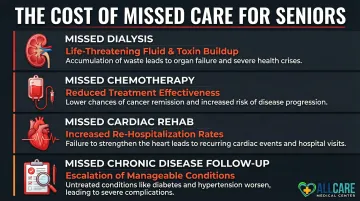
For patients managing conditions that demand consistent, scheduled care, this risk is especially acute:
- Dialysis patients who miss sessions face life-threatening fluid and toxin buildup
- Chemotherapy delays can reduce treatment effectiveness
- Cardiac rehabilitation no-shows increase re-hospitalization rates
- Chronic disease follow-ups, when skipped, let manageable conditions escalate
Social isolation compounds these risks in ways caregivers often underestimate. When seniors can no longer attend worship services, visit friends, or join family gatherings, loneliness sets in fast. The National Academies of Sciences, Engineering, and Medicine found that 24% of community-dwelling adults age 65 and older are socially isolated.
Meta-analyses confirm that isolation and loneliness increase premature death risk by 26% to 32% — comparable to smoking or obesity. For caregivers, this means that arranging dependable transportation is one of the most direct ways to protect a senior's health and quality of life.
Signs It's Time to Arrange Transportation Help for Your Loved One
Recognizing when to transition from family-provided rides to formal transportation support protects both seniors and caregivers from preventable harm.
Driving-related warning signs
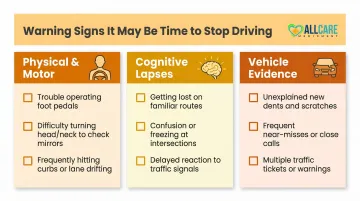
The AAA, AARP, and National Highway Traffic Safety Administration identify specific red flags:
- Physical/motor changes: Trouble moving the foot between gas and brake pedals, difficulty turning the head when backing up, hitting curbs regularly
- Cognitive lapses: Getting lost on familiar routes, confusion at intersections, delayed responses to unexpected situations, unpredictable stopping in traffic
- Vehicular evidence: New dents or scratches on the car, garage, or mailbox; frequent "close calls"; multiple traffic tickets or warnings
Vision impairments (macular degeneration, glaucoma, cataracts) and medications with sedative or anticholinergic effects raise crash risk. If a physician has recommended driving cessation, take that guidance seriously.
The caregiver breaking point
If arranging rides has become a significant source of stress, missed work, or caregiver exhaustion, this signals the informal system is failing. Many of the 78% of caregivers who provide transportation eventually reach a tipping point where the burden becomes unsustainable. Reaching that point is normal, and it's a clear signal that professional transportation support is needed.
How to approach the conversation
Timing and tone matter. A few approaches that tend to work:
- Choose a calm moment, not right after a frightening incident
- Name specific observed behaviors rather than making broad accusations
- Acknowledge the emotional weight — losing driving privileges feels like losing independence
- If resistance is strong, loop in their physician; older adults are more likely to comply when a doctor advises stopping and family agrees
Types of Senior Transportation Services Available to Caregivers
The modern transportation landscape extends far beyond traditional buses, offering specialized options for nearly every mobility level and budget.
Public Transit and Paratransit
Fixed-route public transit (buses, trains) offers low-cost or free transportation for seniors in many communities. However, schedules can be inflexible, and physical accessibility barriers—steep bus steps, long walks to stops—limit usefulness for those with mobility challenges.
ADA Paratransit fills this gap. Under federal mandate (49 CFR § 37.131), public transit agencies must provide origin-to-destination service within ¾ mile of fixed bus routes. Eligibility is strictly based on functional ability—whether a physical, cognitive, or sensory impairment prevents using fixed-route transit independently. Paratransit operates during the same hours as regular buses and cannot impose waiting lists or trip purpose restrictions. However, advance reservations (often 1-2 days) are typically required.
Microtransit and Rideshare Services
Microtransit blends public transit with on-demand rideshare technology. Transit agencies like Miami-Dade's MetroConnect and Pinellas County's PSTA Direct Connect use apps (Via, Uber, Lyft) to provide shared, subsidized rides without the eligibility requirements of paratransit. Fares are typically $1.50-$3.75, and service operates in designated zones.
Rideshare apps (Uber, Lyft) offer maximum flexibility. Some cities have paratransit-rideshare partnerships that subsidize rides for eligible seniors. Caregivers can book rides on behalf of seniors who don't own smartphones, making this option more accessible than many assume.
Non-Emergency Medical Transportation (NEMT)
NEMT is the specialized solution for seniors with significant mobility limitations. These services transport wheelchair users, stretcher-bound patients, and individuals who need hands-on assistance with transfers and personal care during trips.
NEMT providers staff vehicles with trained, certified personnel who assist with:
- Boarding and safely securing wheelchairs or stretchers
- Equipment handling and positioning during transit
- Transfers between vehicles and facilities
- Monitoring patient safety throughout the journey
For example, AllCare Medical Transport in Palm Coast, Florida operates 24/7 with CPR/First Aid and PASS-certified staff who undergo DOT physicals and background checks. They cover ambulatory, wheelchair, and stretcher transport for medical appointments, hospital discharges, dialysis, and long-distance trips across state lines—with family members welcome to ride along.
Volunteer Transportation Programs
Nonprofits, faith communities, and organizations like ITNAmerica match volunteer drivers with seniors for free or low-cost rides. These programs offer a personal touch and relationship continuity that commercial services may lack. However, coverage is often limited to certain geographic areas or trip types, and wheelchair-accessible vehicles may not be available.
Long-Distance Medical Transport
For seniors relocating, moving between facilities, or traveling for specialized care across state lines, long-distance NEMT uses modified vehicles (vans, RVs) with stretcher or hospital bed accommodations. Two drivers and a medical professional typically staff these trips; family members can ride along. Because Medicare and Medicaid rarely cover these services, costs are usually paid out of pocket.
How to Evaluate and Choose the Right Senior Transportation Provider
Credentials and Training to Look For
Required safety credentials include CPR/First Aid certification, PASS (Passenger Assistance and Safety Stretcher) certification for wheelchair and stretcher transport, drug testing, and comprehensive background checks — both national and local. These directly affect passenger safety during boarding, transfers, and the ride itself.
Licensing and insurance are equally non-negotiable. Providers must hold appropriate state transportation licenses and carry both commercial and general liability insurance. In Florida, providers must be fully licensed for medical transport. Verify these before booking any trip.
Once you've confirmed a provider meets baseline safety standards, the next step is asking the right practical questions.
Practical Questions to Ask
Availability and scheduling flexibility:
- Does the provider operate 24/7?
- Can they accommodate same-day or emergency requests?
- Do they offer consistent pickup times, or require long advance reservations?
Vehicle fleet:
- Are wheelchair-accessible vehicles available with proper ramps and securement systems?
- Can stretcher transports be arranged when needed?
- What comfort features are included — cushioning, footrests, seatbelt adjusters?
- Can the same driver be assigned regularly to build familiarity?
Level of support:
- Does the driver provide door-to-door assistance — helping clients from vehicle to facility and back — or just curbside drop-off?
- Will staff wait during appointments if needed?
- Does the provider treat clients with dignity, functioning as an extension of the care team?
Providers that check these boxes — not just the cheapest option — are the ones families can genuinely rely on when it matters most.
Understanding Costs and Coverage for Senior Transportation
Medicare vs. Medicaid Coverage
Medicaid covers non-emergency medical transportation (NEMT) as a mandatory benefit under 42 CFR § 431.53 for eligible enrollees traveling to medically necessary appointments. States administer this through transportation brokers or managed care organizations.
Original Medicare Part B coverage is extremely limited. It primarily covers emergency ambulance transport when traveling in any other vehicle would endanger health. For non-emergency situations, Medicare may cover ambulance transport only if the patient is bed-confined and a physician provides a certification statement. Routine transportation is not covered.
Medicare Advantage (MA) plans vary widely. In 2026, only 24% of individual MA plans offer medical transportation—down from 30% in 2025. Special Needs Plans (SNPs) remain stronger at 67%. With availability declining, caregivers should verify transportation benefits every year during Open Enrollment.
What Is Typically Out-of-Pocket
When insurance doesn't cover the trip, costs vary considerably by service type:
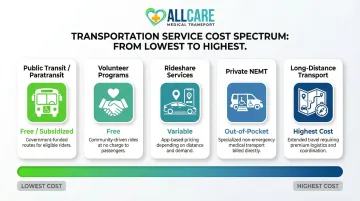
- Public transit and paratransit — usually free or heavily subsidized for older adults and people with disabilities
- Volunteer programs — typically free through nonprofit or faith-based organizations
- Rideshare services — vary by distance and time of day
- Private NEMT and long-distance transport — paid out of pocket, priced by distance, vehicle type, and level of care required
Most NEMT providers will give you a quote before booking.
Cost-Saving Tips for Caregivers
- Check with the Area Agency on Aging for local subsidy programs or funding through Title III of the Older Americans Act or FTA Section 5310
- Ask whether the senior's Medicare Advantage or private insurance plan includes any transportation benefit
- Explore nonprofit and faith-based volunteer programs that offer free rides
- Contact AllCare Medical Transport at 386-864-7145 or info@allcaremedicaltransport.com for a free quote tailored to your specific transportation needs
How to Find Senior Transportation Services Near You
Key Resources to Contact
- Search the Eldercare Locator or call 1-800-677-1116 to reach your local Area Agency on Aging — the most comprehensive starting point for vetted providers and subsidy programs.
- Dial 211 (or visit 211.org) to reach United Way's free referral service; 211 specialists made 19 million referrals in 2025.
- Use the Community Transportation Provider Map at nationalcenterformobilitymanagement.org to find FTA-funded transit systems near you.
- Browse ridesinsight.org or call 855-607-4337 to search ITNAmerica's database of local options, including volunteer driver programs.
Ask for a Mobility Manager
If the resources above feel overwhelming, ask specifically for a mobility manager. These specialists — often employed by transit agencies, Area Agencies on Aging, or healthcare systems — coordinate options and handle individualized trip planning when a single service isn't enough. Think of them as a navigator for your loved one's transportation needs.
Frequently Asked Questions
Why is transportation important for seniors?
Transportation enables seniors to access medical care, maintain social connections, and live independently—all of which directly support physical and mental health. Research shows that driving cessation without adequate alternative transport increases the risk of long-term care placement by nearly fivefold.
How do seniors without a car get around?
Main alternatives include public transit and ADA paratransit, rideshare services (Uber/Lyft), NEMT for medically complex needs, volunteer driver programs, and community transportation coordinated through the Area Agency on Aging.
How to transport an elderly patient?
Start by assessing mobility level. Ambulatory seniors can use standard rideshare or volunteer drivers, while wheelchair-dependent individuals need accessible vans with ramps and securement. Stretcher-bound patients require certified NEMT providers with trained staff for safe transfers.
Does Medicare cover medical transport for seniors?
Standard Medicare Part B covers emergency ambulance transport only. Medicaid covers NEMT for eligible enrollees. Some Medicare Advantage plans include non-emergency medical transport as a supplemental benefit; verify your specific plan annually.
What disabilities qualify for paratransit?
Under the ADA, anyone who cannot independently use fixed-route buses or trains due to a physical, cognitive, or sensory disability may qualify. Eligibility is based on functional ability—not diagnosis alone—assessed by the local transit agency, and conditional eligibility (qualifying only in certain situations) is also possible.