Introduction
Transportation isn't just a convenience for older adults—it's a lifeline. According to the Eldercare Locator, transportation is the most requested support service for older adults, ranking above housing, food, and healthcare assistance. Vision loss, mobility challenges, and the difficult decision to give up car keys leave a growing number of seniors without a reliable way to get around.
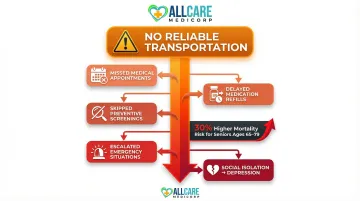
The consequences are serious. Delayed care due to transportation barriers increases mortality risk by 30% for seniors aged 65–79, and in 2017 alone, 5.8 million Americans postponed medical care simply because they had no way to get there.
This guide covers the health consequences of transportation gaps, the main options available—from public transit to paratransit to professional NEMT—how to pay for services, and what to look for in a provider so older adults and their families in Florida can find the right solution.
TLDR
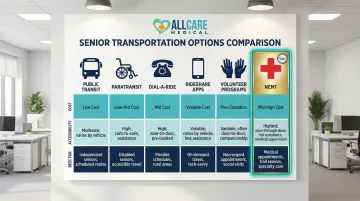
- Six main options exist for older adults: public transit, paratransit, Dial-A-Ride, rideshare apps, volunteer programs, and NEMT
- NEMT provides professional rides to medical appointments and may be covered by Medicaid or Medicare Advantage plans
- Transportation barriers increase mortality risk, worsen chronic disease management, and accelerate social isolation
- Vetting a provider's licensing, insurance, staff credentials, and availability protects older adults from unreliable or unsafe rides
Why Transportation Access Matters for Older Adults
The Scale of the Problem
Currently, 19% of Americans aged 65 and older do not hold a driver's license, leaving nearly 8 million seniors dependent on alternative transportation. As the population ages, this number grows daily—yet the infrastructure to support non-drivers hasn't kept pace with demand.
Health Consequences of Transportation Barriers
The connection between transportation and health outcomes is direct and measurable. Research shows that delayed care due to transportation barriers increases mortality risk by 36% for adults aged 18-64 and 30% for seniors aged 65-79. When older adults miss medical appointments, the consequences cascade:
- Preventive care gaps lead to undetected conditions
- Medication refills are delayed, disrupting chronic disease management
- Routine screenings for cancer, diabetes, and heart disease are postponed
- Minor health issues escalate into emergency situations
The American Journal of Public Health found that 5.8 million people delayed medical care in 2017 specifically because they lacked transportation. For seniors managing multiple chronic conditions—diabetes, heart disease, COPD—consistent access to doctors, specialists, and therapies is a medical necessity, not a convenience.
Social Isolation and Mental Health Risks
Mobility loss cuts off far more than medical care. Research published in Innovation in Aging confirms that loneliness significantly mediates the association between transportation barriers and depression and anxiety in older adults. Seniors without reliable transportation become cut off from:
- Community centers and social activities
- Religious services and faith communities
- Exercise programs and senior centers
- Family gatherings and social visits
- Volunteer opportunities and hobbies
This isolation accelerates cognitive decline and increases depression risk—and the less mobile a senior becomes, the harder it is to rebuild those social connections.
The Caregiver Burden
When formal transportation options fail, family members step in. On average, family caregivers spend 27 hours per week providing care, with transportation ranking as the most common task at 78%—higher than grocery shopping or housework.
For working caregivers, this means missed shifts, scheduling conflicts, and eventual burnout. Seniors who need dialysis, physical therapy, or specialist visits two to three times a week place a particularly heavy demand on family members who weren't able to plan for that level of commitment.
Transportation Options Available to Older Adults
The right option depends largely on where a senior lives—urban areas offer more choices than rural or suburban communities—along with their mobility level and whether trips are medical or personal.
Public Transit and Senior Discount Programs
Many local bus and rail systems offer discounted or free fares for older adults, with some transit agencies providing "travel buddy" programs that help seniors navigate routes with confidence. This option works best for:
- Seniors comfortable with technology or willing to learn
- Urban areas with extensive route coverage
- Destinations within walking distance of stops
Limitations:
- Fixed routes may not serve all medical facilities
- Weather exposure while waiting and walking
- Potential accessibility gaps (stairs, narrow doors, long walks)
- Requires physical ability to board vehicles independently
Paratransit Services
The Americans with Disabilities Act mandates paratransit in communities with fixed-route transit. Transit agencies must provide complementary paratransit within three-fourths of a mile on each side of fixed routes. In 2023, 50.9 million ADA paratransit trips were provided nationwide.
Key Features:
- Curb-to-curb rides in wheelchair-accessible vehicles
- Personal care attendants ride at no extra cost
- Must qualify based on disability status
- Requires booking 1-2 days in advance
- Service limited to within ¾ mile of bus routes
Best For: Seniors with mobility impairments who cannot use fixed-route transit but live within service boundaries.
Dial-A-Ride and Microtransit
Dial-A-Ride programs are city or county-run phone scheduling services specifically for older adults and people with disabilities. Riders typically book 1-2 days in advance, and service areas vary by locality.
Microtransit is an emerging on-demand public option that uses app-based scheduling for shared rides. Unlike paratransit, microtransit often has no eligibility requirements and functions as a bridge between rideshare and public transit. Coverage is still limited, with only a handful of cities currently offering the service.
Rideshare Services
Uber and Lyft now serve older adults through healthcare partnerships and specialized options. Uber Health allows healthcare organizations to request non-emergency medical transportation and wheelchair rides through a centralized dashboard. However, wheelchair-accessible vehicles (WAV) remain scarce—Uber WAV is only available in select markets, and in cities offering WAV rides, only 1 in every 1,400 rides is wheelchair-accessible.
Challenges:
- Learning curve for technology-averse seniors
- Limited wheelchair accessibility
- Drivers not trained in medical assistance
- No guaranteed same-driver continuity
Some communities now offer senior-specific rideshare support programs that help older adults navigate apps and book rides.
Volunteer Transportation Programs
For seniors who need a more personal touch than apps or public transit can offer, nonprofit and faith-based volunteer driver programs fill the gap. Many pair riders with the same driver consistently and provide hands-on assistance from door to appointment—not just curb to curb.
Benefits:
- Often free or donation-based
- Relationship-building with consistent drivers
- Personalized assistance and companionship
- Flexible scheduling for non-medical trips
Limitations:
- Availability varies widely by community
- Volunteer availability can limit service hours
- May not accommodate wheelchairs or stretchers
- Capacity constraints during high-demand periods
How Non-Emergency Medical Transportation (NEMT) Works
What NEMT Is
Non-Emergency Medical Transportation (NEMT) is a professional service that provides safe, scheduled rides to and from medical appointments. It's designed for patients who cannot drive themselves but do not require emergency care. NEMT is especially critical for seniors managing chronic conditions, attending dialysis, physical therapy, specialist appointments, or hospital discharge.
Between 2018 and 2021, approximately 3–4 million Medicaid beneficiaries used NEMT annually, and the Administration for Community Living funded 13.1 million one-way transportation trips in 2023.
How to Access NEMT
Seniors and families can access NEMT through three main pathways:
- Medicaid NEMT brokers dispatch to approved providers after verifying eligibility
- Medicare Advantage plans that include transportation benefits
- Direct booking with licensed NEMT providers for private-pay clients
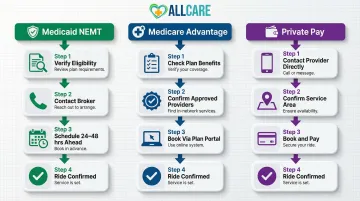
Medicaid-covered NEMT typically requires advance scheduling (24–48 hours) and is limited to medical trip purposes only.
What Separates Quality NEMT from Basic Rideshare
Professional NEMT providers offer capabilities rideshare cannot match:
- Full commercial licensing and liability insurance
- CPR/First Aid-certified staff trained in medical emergencies
- PASS-certified vehicles for wheelchair and stretcher transport
- Drug-tested and background-checked drivers
- Door-through-door assistance—not just curb-to-curb
- Ability to help patients in and out of vehicles
- Accompaniment into medical facilities when needed
AllCare Medical Transport: A Florida NEMT Example
AllCare Medical Transport, based in Palm Coast, Florida, is one example of what these standards look like in practice. Founded in 2010 by Lisa and Tim Hogan — after Lisa spent years personally caring for her grandmother and father — the company was built around a straightforward conviction: families shouldn't have to worry about who's transporting their loved ones.
AllCare operates throughout Flagler and Alachua counties and statewide, with 24/7 availability including weekends and holidays. The company holds full Florida medical transport licensing, carries commercial and general liability insurance, and employs only drug-tested, background-checked staff.
Transport options cover all three mobility levels:
- Ambulatory — for seniors who can walk with some assistance
- Wheelchair — with PASS-certified vehicles and trained staff
- Stretcher — for patients who need to remain lying down
With a 4.8-star rating across 57 Google reviews, AllCare's approach — "treating your family like their family" — reflects what to look for when evaluating any NEMT provider in your area.
How to Pay for Senior Transportation Services
Medicaid NEMT
Federal law requires Medicaid to cover transportation to medical appointments in most states, including Florida. Riders must qualify and trips must be for medical purposes. To access this benefit:
- Contact your state Medicaid program
- Request the approved NEMT broker in your area
- Schedule trips through the broker (typically 24-48 hours advance notice)
- Verify the trip purpose is medically necessary
Medicare Advantage (Part C) and Flex Cards
If you don't qualify for Medicaid, Medicare Advantage may offer another path. Traditional Medicare Parts A and B generally do not cover routine non-emergency transportation, but 30% of Medicare Advantage plans offered transportation benefits for medical needs in 2025, down from 36% in 2024.
Some plans provide Flex Cards loaded with funds for eligible rides through approved providers or rideshare apps. Check your plan's Summary of Benefits or call your insurer directly to confirm coverage limits, approved providers, and booking procedures.
Other Funding Sources
Beyond federal programs, several other sources can help cover the cost of senior transportation:
- Area Agencies on Aging often fund or coordinate rides for seniors — services vary by region but may include free or subsidized trips
- Veterans Affairs programs reimburse eligible veterans $0.415 per mile for approved health-related travel, and Disabled American Veterans operates a free fleet to VA medical facilities
- Eldercare Locator (1-800-677-1116) connects families to local transportation programs across the country
- Dial 211 (United Way) for referrals to community assistance programs in your area
- Rides in Sight offers a searchable ZIP code directory of local providers
Tips for Choosing the Right Senior Transportation Provider
Verification Checklist (Non-Negotiable Requirements)
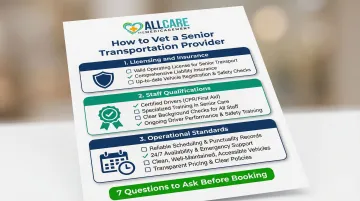
Before booking any provider, confirm they meet these safety and accountability standards:
Licensing and Insurance:
- Fully licensed for medical transport in your state
- Commercial liability insurance (ask for proof)
- General liability coverage
Staff Qualifications:
- All drivers pass drug tests and background checks
- CPR/First Aid certification
- PASS certification (wheelchair and stretcher handling)
- DOT physical examination completion
Operational Standards:
- Available 24/7 or clearly defined hours
- Wheelchair and stretcher capability if needed
- Service area includes your pickup and destination
- Approved Medicaid/insurance vendor (if using benefits)
Key Questions to Ask Before Booking
- Are you available 24/7 or after hours? Medical needs don't follow business hours.
- Can you accommodate wheelchairs or stretchers? Confirm vehicle capability matches your needs.
- Do you serve my specific area and destination? Verify both pickup location and medical facility.
- Will the same driver be available regularly? Consistency builds trust and familiarity.
- Are you an approved Medicaid/insurance vendor? Essential if using benefits to pay.
- What assistance do drivers provide? Door-through-door vs. curb-to-curb affects how much help you receive at the door
- How far in advance must I book? Understand scheduling requirements.
Look for Providers Who Treat Clients as Individuals
The best transportation providers view clients as people, not passengers. Look for companies with:
- Consistent, respectful service backed by positive family reviews
- A track record in the community (years of operation)
- Family-centered approach to care
- Trained staff who understand medical conditions and patient needs
AllCare Medical Transport is one example of this done right. Founded by Lisa Hogan after years of personally caring for her grandmother and father, the company has earned a 4.8-star rating across 57 reviews by treating clients' families the way they'd want their own treated. That kind of track record is exactly what you're looking for.
Frequently Asked Questions
Does Medicare pay for patient transportation?
Traditional Medicare (Parts A and B) does not typically cover routine non-emergency transportation. However, Medicare Advantage (Part C) plans often include transportation benefits as a supplemental service. Medicaid separately covers NEMT for eligible enrollees going to medical appointments—verify your specific plan's benefits or contact your insurer.
What is the most requested support service for the elderly?
Transportation consistently ranks as the most requested support service for older adults. The Eldercare Locator cites it as their top inquiry category, ahead of housing, food, and healthcare, which shows how central mobility is to independent living.
Why is transportation important for seniors?
Transportation enables older adults to attend medical appointments, stay socially connected, and maintain independence. Without reliable access, seniors face missed care, increased isolation, and worse outcomes for managing chronic conditions.
How do seniors without a car get around?
Seniors without cars use public transit with senior discounts, paratransit for those with disabilities, Dial-A-Ride services, rideshare apps, volunteer driver programs, and professional NEMT providers. The best option depends on the senior's mobility needs, scheduling flexibility, and local availability.
What is non-emergency medical transportation (NEMT)?
NEMT is a professional, scheduled transport service for patients who need rides to medical appointments but do not require emergency ambulance service. It serves individuals who use wheelchairs or stretchers or need driver assistance, and is often covered through Medicaid or Medicare Advantage plans.
How do I find senior transportation services near me?
Use the Eldercare Locator (1-800-677-1116), dial 211 for United Way referrals, search Rides in Sight by ZIP code, or contact your local Area Agency on Aging. These resources connect you to approved providers and mobility managers in your community.