Introduction
Margaret has attended the same cardiologist in Gainesville for eight years, but now, at 79, her family has taken her car keys. Her daughter lives in Jacksonville and works full-time. Her appointment is Thursday at 10 a.m. The question keeping Margaret awake isn't whether she needs to go—it's how she'll get there.
Transportation is a hidden but critical barrier to healthcare access for older adults, particularly in suburban and rural Florida communities where public transit is sparse and medical specialists may be an hour away. Roughly 1 in 10 adults over 65 have stopped driving, most citing safety concerns. Without reliable transportation, routine medical care becomes a logistical puzzle—one that too many seniors stop trying to solve.
This guide covers:
- Transportation options available to Florida seniors
- What Medicare and Medicaid actually pay for
- How to evaluate a provider's credentials and safety standards
- What to expect on costs
TLDR: Key Takeaways
- Seniors can choose from NEMT, paratransit, volunteer programs, and ride-hailing services
- Medicare Advantage often includes transportation benefits; Medicaid covers NEMT for eligible enrollees
- Costs range from free (Medicaid, volunteer programs) to $25–$100+ per ride
- Prioritize licensed providers with CPR/First Aid certified drivers, wheelchair accessibility, and 24/7 availability
Why Getting to Doctor Appointments Is a Growing Challenge for Seniors
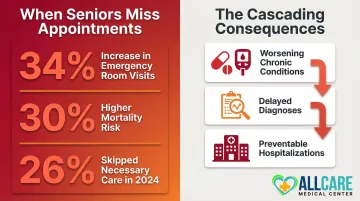
26% of seniors admitted to skipping medical care in 2024, with 13% missing at least one appointment due to barriers including transportation. This isn't just an inconvenience—it's a patient safety issue with measurable health consequences.
Transportation barriers increase emergency department use by 34% and raise all-cause mortality risk by 30% among adults aged 65-79 with chronic conditions. When seniors can't reach their doctors, health problems escalate. Skipped appointments contribute to:
- Worsening diabetes control and medication gaps
- Delayed cancer diagnoses caught too late for early treatment
- Preventable hospitalizations that drive up costs for patients and the healthcare system
The financial toll follows the health toll: a missed primary care visit can become a costly emergency room stay.
Many older adults rely on family caregivers for rides. Family caregivers provided 49.5 billion hours of care in 2024, averaging 27 hours per week, and over 80% include transportation among those duties. That arrangement works until it doesn't — adult children have jobs, live hours away, and can only absorb so many weekday morning drives to specialists before the strain shows.
Dedicated senior transportation services exist specifically to fill this gap.
Senior Transportation Options: What's Available
Public Transit and Paratransit Services
Fixed-route public buses offer discounted or free fares for seniors in many Florida counties. However, most seniors with mobility limitations or who live outside urban cores cannot use standard transit.
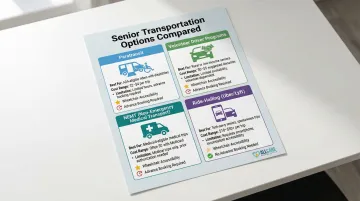
ADA-mandated paratransit services provide curb-to-curb pickup for individuals who cannot use standard transit due to disability. Service is limited to origins and destinations within ¾ mile of a fixed bus route. You must book rides at least one day in advance, and fares are capped at twice the standard bus fare (typically $3–$5 in Florida).
Key limitations:
- Requires 24+ hours advance booking
- Service restricted to ¾ mile corridor along bus routes
- Rural areas like Palm Coast or Flagler County may have minimal or no coverage
- Not designed for stretcher or complex medical needs
Volunteer Driver Programs
Nonprofit and faith-based organizations connect older adults with vetted volunteer drivers, often at no cost. Programs like ITNAmerica's Rides in Sight and USAging.org's Eldercare Locator help seniors find local volunteer networks. These programs have supported over 229,000 transportation requests nationally.
Volunteer programs work well for routine trips, but they have real limits:
- Free or donation-based, with no consistent scheduling guarantee
- Wheelchair accessibility not always available
- Typically restricted to medical trips only
- Drivers may be unavailable on short notice
Non-Emergency Medical Transportation (NEMT)
When volunteer availability is unreliable or a senior's needs are more complex, NEMT is the next step up. NEMT services use professionally operated vehicles—wheelchair vans, stretcher-capable transports—staffed by trained, credentialed personnel who pass drug testing and national background checks.
AllCare Medical Transport in Palm Coast, Florida, for example, employs CPR/First Aid and PASS-certified drivers who provide door-to-door service for ambulatory, wheelchair, and stretcher patients across Flagler, Alachua, and surrounding counties. Founded in 2010 by Lisa and Tim Hogan, the company grew out of Lisa's experience caring for her own grandmother and father—a personal history that shaped a simple standard: families should feel safe trusting someone with their loved one.
NEMT is the right choice when a senior has mobility limitations, cannot sit upright, or relies on medical equipment during transport.
Ride-Hailing and Senior-Adapted Rideshare Services
Uber and Lyft work for routine, ambulatory doctor trips. Some Medicare Advantage plans and transit authorities partner with these apps for on-demand paratransit. Uber Health allows care coordinators to schedule rides via dashboard; patients receive trip details via text or landline and don't need the app.
These services have meaningful limitations for many seniors:
- Standard drivers are not trained to assist medically fragile passengers
- Vehicles are typically not wheelchair accessible
- App-based booking can be a barrier—only 78% of adults 65+ own a smartphone, compared to 97% under age 50
- 59% of older adults say technology is not designed with them in mind
Community, Hospital, and Agency-Based Programs
Some hospitals, senior centers, and Area Agencies on Aging coordinate or subsidize transportation for patients. Two immediate resources:
- Eldercare Locator: 1-800-677-1116
- Dial 211: Connects callers to local transportation assistance
Both lines are free, available in multiple languages, and can connect seniors or caregivers to local programs same-day.
Does Medicare or Medicaid Cover Senior Rides to the Doctor?
Original Medicare (Parts A and B)
Original Medicare covers emergency ambulance transport—80% of the approved amount after the Part B deductible—and, in limited circumstances, non-emergency transport. But only when:
- A physician provides a written order confirming it is medically necessary
- The patient cannot safely be transported by any other means (e.g., cannot walk, cannot sit in a wheelchair, or resides in a skilled nursing facility)
Critical point: Original Medicare does NOT cover routine transportation to a doctor's office, even if the patient cannot drive. Many seniors assume they're covered — and miss appointments when they find out they're not.
Medicare Advantage (Part C) Transportation Benefits
Medicare Advantage plans must offer supplemental benefits beyond Original Medicare. In 2026, 24% of individual Medicare Advantage plans offer transportation benefits for medical needs (down from 30% in 2025). That said, 67% of Special Needs Plans (SNPs) still include NEMT.
What to do:Call your plan's member services line and ask: "Does my plan cover rides to doctor appointments, and how many per year?" Typical allowances range from 12 to 48 one-way trips annually. Some plans also cover Uber or Lyft rides through direct partnerships — worth asking about specifically.
Medicaid Non-Emergency Medical Transportation (NEMT)
Medicaid's NEMT benefit covers rides to and from covered medical appointments for eligible enrollees who cannot access other transportation. Trips must be booked in advance (typically 2+ business days), and the appointment must be with a Medicaid-approved provider.
Florida has additional rules for Medicaid transportation:
- Managed care plans must ensure 90% of riders arrive within 15 minutes of their appointment
- Brokers cannot require more than 3 business days' advance notice
- Recipients pay a $1 copayment per trip unless exempt
If denied: Seniors have the right to appeal. Request the denial in writing, file a standard plan appeal (resolved within 30 days) or expedited appeal (72 hours), and contact your state's Medicaid member services for the appeals process.
How to Choose the Right Senior Transportation Provider
Credentials and Safety Standards
Start here — these are non-negotiable before trusting any provider with a vulnerable family member:
- Fully licensed for medical transport in the state
- Carries commercial and general liability insurance
- Employs CPR/First Aid certified staff
- Requires drivers to pass drug testing and national background checks
Vehicle Accessibility and Fleet Capability
Mobility needs can change quickly, so confirm the fleet is ready before you need it:
- Offers wheelchair-accessible vans with proper mobility aid tie-downs
- Provides stretcher-capable vehicles for patients who can't sit upright
- Holds PASS certification (wheelchair and stretcher), covering a wider range of transport needs
Availability and Service Scope
Appointments and discharges don't always happen at convenient times. Confirm the provider can accommodate your schedule:
- Operates 24 hours a day, 7 days a week
- Handles both local trips and long-distance transport (across Florida or out of state)
- Has clear advance booking requirements so there are no surprises
Reputation and Facility Relationships
A provider's track record tells you more than any brochure. Before booking:
- Check Google ratings and recent reviews for consistent reliability
- Ask whether the provider holds approved vendor status with hospitals, hospices, or senior care facilities
Providers that function as an extension of the facilities they serve — rather than a standalone cab service — bring an added layer of accountability to every trip.
How Much Does Senior Transportation to Doctor Appointments Cost?
Costs vary widely depending on the service type and how much assistance a senior needs. Here's what to expect across common options:
Cost ranges by service type:
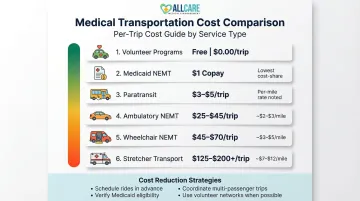
- Paratransit rides: $3–$5 per trip in Florida (Gainesville RTS: $3; Miami-Dade: $3.50)
- Volunteer programs: Free or donation-based
- Basic ambulatory NEMT: $25–$45 per trip, $2.50–$3.50 per mile
- Wheelchair-accessible NEMT: $45–$70 per trip, $3.50–$5 per mile
- Stretcher transport: $125–$200+ per trip, $5–$7 per mile
- Medicaid NEMT: $1 copayment per trip (free for exempt enrollees)
Key factors that drive cost:
- Distance traveled
- Type of vehicle required (standard van vs. wheelchair-accessible vs. stretcher)
- Shared vs. private ride
- Time of day or day of week — some providers charge more for early morning, evening, or weekend trips
Cost reduction strategies:
- Apply for Medicaid NEMT coverage if eligible
- Check Medicare Advantage plan transportation benefits
- Contact your local Area Agency on Aging for subsidized programs
- Confirm with NEMT providers whether they accept insurance or coordinate billing directly with Medicare Advantage plans
Finding Senior Medical Transportation in Florida
Florida-specific resources:
- Florida Commission for the Transportation Disadvantaged (CTD): Arranges subsidized rides through county-level Community Transportation Coordinators — contact your county's coordinator directly for eligibility
- Area Agency on Aging — Northeast Florida (Flagler, St. Johns, Volusia): ElderSource, 1-888-242-4464
- Area Agency on Aging — North Central Florida (Alachua): Elder Options, 1-800-262-2243
- Florida Medicaid managed care plans: Check the NEMT broker contact list for your plan's assigned broker (ModivCare, MTM, or Ride2MD)
What Florida seniors need in an NEMT provider:
Medical specialists are often in Gainesville, Jacksonville, or Tampa—requiring transport across county or state lines. Providers must offer both local and long-distance service, not just single-city coverage.
One option serving this corridor is AllCare Medical Transport, based in Palm Coast. Founded in 2010 by Lisa and Tim Hogan, the company grew out of Lisa's experience caring for her own grandmother and father — a background that shapes how the team works with clients and families today. They're available 24/7 for both local and long-distance trips across Florida and nationally.
Readers in Palm Coast, St. Augustine, Daytona, and surrounding areas can contact AllCare Medical Transport at 386-864-7145 to discuss scheduling, accessibility needs, and insurance coordination.
Frequently Asked Questions
How do seniors without a car get to doctor appointments?
Seniors can use NEMT providers, ADA paratransit services, Medicaid-covered rides, volunteer driver programs, or Medicare Advantage transportation benefits. In suburban and rural Florida areas like Flagler County, the Eldercare Locator (1-800-677-1116) and 211 can connect you with options nearby.
Does Medicare cover transportation for seniors to doctor appointments?
Original Medicare covers only limited, medically necessary non-emergency transport confirmed by a doctor; routine rides to appointments are not covered. However, many Medicare Advantage plans include transportation as a supplemental benefit—review your plan details or call member services to confirm.
How much does Medicare pay for rides to the doctor?
For covered emergency ambulance transport, Original Medicare pays 80% of the approved cost after the Part B deductible. For non-emergency transport under Medicare Advantage, the number of covered rides and any copays depend on your specific plan—call your plan for exact figures.
How much does transportation for seniors to doctor appointments cost?
Costs range from free (Medicaid NEMT, volunteer programs) to $25–$100+ for private NEMT rides. Paratransit typically runs $3–$5 per trip. The main cost drivers are distance, vehicle type (wheelchair vs. stretcher), and whether the ride is shared or private.
Does Medicare pay for Uber rides to doctor appointments?
Original Medicare does not cover Uber or Lyft rides. However, some Medicare Advantage plans have partnerships with ride-hailing companies and cover a set number of rides annually—contact your plan to ask whether this benefit is included.
Are there free or low-cost transportation programs for seniors in Florida?
Yes. Medicaid NEMT, Area Agency on Aging programs, volunteer driver networks, and Florida's Commission for the Transportation Disadvantaged all offer free or subsidized rides. Dial 211 or call the Eldercare Locator at 1-800-677-1116 to find options in your area.