
Arranging patient transport isn't as simple as calling a cab. The right choice depends on the patient's mobility, medical condition, destination, and several other factors that vary widely. Getting it wrong can delay critical care, cause unnecessary pain, or put the patient at serious risk.
TL;DR
- Non-emergency medical transport (NEMT) is designed for patients needing assistance to appointments without emergency care
- Match transport type to patient needs — ambulatory, wheelchair, or stretcher — based on mobility level
- Have mobility status, destination, insurance details, and equipment needs ready before booking
- Book 48–72 hours ahead and confirm the provider is licensed, insured, and has certified staff
- Never use rideshare for medical trips or skip sharing critical mobility and equipment details when booking
Understanding Patient Transport: Types and Who Needs It
Patient transport covers a broad range—from basic rides for mobile patients to wheelchair and stretcher transport for those with significant limitations, to long-distance trips across state lines. Not all patients need the same level of service, and matching the right transport to the patient's condition is the foundation of safe care.
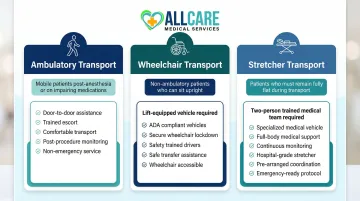
Ambulatory Transport
Ambulatory transport serves patients who can walk with minimal assistance but shouldn't drive. Common situations include:
- Recovering from procedures that involved anesthesia
- Vision impairment that prevents safe driving
- Medications that prohibit operating a vehicle
The driver assists with navigation from location to vehicle and back, but the patient maintains independent mobility throughout the trip.
Wheelchair and Stretcher Transport
Wheelchair transport accommodates patients with mobility limitations who can sit upright. These trips require specially equipped vehicles with wheelchair lifts and secure restraint systems. According to the National Highway Traffic Safety Administration, improper or no wheelchair securement is involved in 35% of motor vehicle-related injury incidents for wheelchair users—proper equipment and trained staff are non-negotiable.
Stretcher transport is for patients who must remain lying flat due to post-surgical recovery, spinal conditions, hospice care, or major procedure aftercare. These vehicles accommodate a full-length stretcher with proper securement systems. Trips also require trained medical transport specialists to manage patient positioning and comfort throughout the journey.
Long-Distance and Specialty Transport
Long-distance non-emergency medical transport (NEMT) serves patients traveling across cities or states for specialist care, clinical trials, or facility-to-facility transfers. Specialty variations include:
- Bariatric transport for patients requiring reinforced equipment and wider doorways
- Hospice transport for comfort-focused trips with sensitivity to patient fragility
- Transport for cognitively impaired patients, requiring staff trained in dementia care and behavioral de-escalation
What You Need Before Booking Patient Transport
Booking the right transport comes down to having the right information ready before you call. Missing details — mobility status, equipment needs, insurance authorization — are the most common reasons trips get delayed or assigned the wrong vehicle type.
Essential Patient Information
Have ready:
- Full name and current mobility status (can they walk, use a wheelchair, or must they lie flat?)
- Equipment traveling with the patient: oxygen tank, IV pole, walker, or other medical devices
- Patient weight if bariatric accommodations are needed
- Medical condition relevant to transport (post-surgical, dialysis patient, etc.)
Logistical Details
Confirm these details before you book:
- Pickup location including floor and room number for hospital pickups
- Destination address with access notes (stairs, narrow doorways, elevator availability)
- Anticipated pickup date and time window
- Whether a companion or caregiver will travel along
Insurance and Payment Preparation
Insurance coverage for NEMT trips varies significantly depending on your program type. Medicare Part B covers ambulance services only when the patient's medical condition contraindicates other transport—routine NEMT like wheelchair vans is explicitly excluded.
Medicaid, however, federally mandates transportation coverage for beneficiaries traveling to medical appointments. Between 2018 and 2021, 3 to 4 million Medicaid beneficiaries used NEMT annually, representing 4–5% of all beneficiaries.
Before booking:
- Confirm whether your insurance, Medicaid, or Medicare Advantage plan covers this trip type
- Have insurance card, member ID, and prior authorization numbers ready
- Understand that many NEMT trips are private pay—providers should offer clear upfront pricing
Provider Vetting Criteria
Confirm the provider meets these standards:
- Fully licensed and insured in the state
- Drivers background-checked and drug-tested
- Staff holds CPR/First Aid and PASS (wheelchair/stretcher) certification
These credentials directly affect patient safety during loading, transit, and unloading. AllCare Medical Transport in Florida, for instance, requires all drivers to pass drug tests, DOT physicals, and national and local background checks, with every staff member CPR/First Aid and PASS certified.
How to Arrange Patient Transport: Step-by-Step
Following a structured process prevents the most common sources of transport failure.
Step 1: Assess the Patient's Mobility and Medical Needs
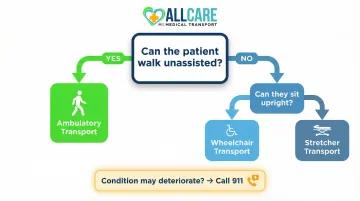
Determine whether the patient can walk unassisted, needs a wheelchair, or must remain reclined. This single decision drives every downstream choice about vehicle type, staffing, and equipment.
If unsure, consult the patient's doctor, discharge planner, or nursing team. For hospital discharges, the discharge planner typically classifies the appropriate service level based on current condition and mobility restrictions.
Step 2: Identify the Right Type of Transport Service
Match the assessed mobility level to the correct NEMT category:
- Ambulatory for patients who can walk with minimal help
- Wheelchair for non-ambulatory patients who can sit upright
- Stretcher for patients who must remain horizontal
Confirm any accommodations needed, such as bariatric equipment, oxygen compatibility, or a second attendant for stretcher transfers.
Important distinction: If the patient may deteriorate en route or requires paramedic-level care, contact 911 or an emergency ambulance service instead. NEMT is for stable, non-emergency trips only.
Step 3: Research and Select a Qualified Provider
Once you know the service type needed, search for licensed NEMT providers in the patient's area. Verify:
- State licensing status and current insurance coverage
- Staff certifications (PASS for wheelchair/stretcher, CPR/First Aid)
- 24/7 availability for flexibility when discharge times shift or appointments run late
Providers like AllCare Medical Transport operate around the clock across Florida, covering both local and long-distance trips. Check reviews specifically for experience with the patient's mobility needs — a provider that regularly handles stretcher transport is not the same as one that primarily serves ambulatory riders.
Step 4: Book the Transport with Complete Information
Contact the provider by phone or online booking system. Provide all patient and logistical details:
- Pickup location, destination, and service type
- Equipment needs and estimated time window
- Any companion riders or special requirements
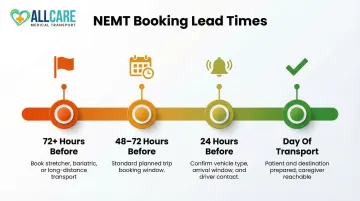
Timing matters: Medicaid brokers typically require a minimum of 3 business days' advance notice for routine trips. Stretcher transport and bariatric-capable vehicles require advance scheduling due to fleet and staffing requirements. Book 48–72 hours ahead for planned trips; for hospital discharges, book as soon as the anticipated discharge date is known.
Step 5: Confirm Details and Prepare for Day of Transport
Call to reconfirm the booking 24 hours before. Verify:
- Vehicle type dispatched matches the required service level
- Arrival window and driver's contact information
- Any changes to the patient's condition or needs
Prepare the patient and destination: ensure equipment is packed and accessible, the destination is ready to receive the patient (bed available, stairs cleared), and a family member or caregiver is reachable by phone during transport.
Key Factors That Affect Your Transport Arrangement
Even with the right provider booked, several variables affect how smoothly transport goes.
Distance shapes pricing, staffing, and scheduling lead time more than most families expect. Local county trips and long-distance or out-of-state transports are quoted differently, and not every provider covers both. Confirm the provider handles the full route before booking — AllCare Medical Transport, for instance, runs both local Florida trips and nationwide long-distance transports from the same team.
Patient condition can shift between booking and transport day. Post-surgical complications, increased pain, or updated physician orders may require upgrading from wheelchair to stretcher service. Notify the provider immediately if anything changes — arriving with the wrong vehicle forces rebooking and delays discharge.
Two additional factors to verify before finalizing any booking:
- Insurance and prior authorization: Some NEMT trips require pre-authorization before coverage applies. Medicaid-covered NEMT in many states must go through a designated broker — skipping this step shifts the full cost to the patient. Verify requirements early.
- Provider credentials and fleet: Not every NEMT provider is equipped for every service type. Confirm the fleet includes the specific vehicle needed — hydraulic lift van, stretcher transport with a two-person team — and that staff holds the certifications for your patient's care level.
Common Mistakes to Avoid When Arranging Patient Transport
Even well-intentioned arrangements go wrong. These are the most common mistakes to avoid:
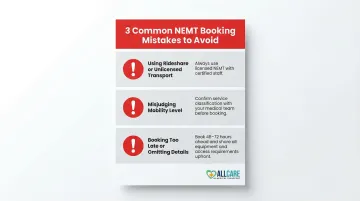
- Using rideshare or unlicensed transport: Standard rideshare drivers aren't trained to assist patients with mobility limitations, manage wheelchairs or stretchers, or respond to changes in a patient's condition mid-trip. Always use a licensed NEMT provider with certified, background-checked staff.
- Misjudging the patient's mobility level: Families often book ambulatory transport for someone who needs wheelchair service, or wheelchair service for a patient who will require a stretcher post-surgery. Confirm the correct mobility classification with the medical team before booking—arriving with the wrong vehicle means delays and rebooking.
- Booking too late or leaving out key details: Stretcher transport, bariatric service, and long-distance trips often can't be accommodated on short notice. Omitting details like equipment needs, stair access at the destination, or companion riders causes avoidable day-of problems. Book early and share complete information upfront.
Frequently Asked Questions
What are the main types of patient transport?
The main types are ambulatory transport for patients who can walk with minimal help, wheelchair transport for patients who cannot walk safely but can sit upright, stretcher transport for patients who must remain lying flat, and specialty options like bariatric or long-distance transport. Each requires specific vehicle equipment and trained staff.
How much does patient transport cost?
Costs vary widely based on service type, distance, and provider. Ambulatory trips are the least expensive, stretcher transport the most. State Medicaid fee schedules provide benchmarks—for example, Florida Medicaid reimburses $137.96 per basic non-emergency trip, while private-pay rates can be significantly higher. Some trips may be covered by Medicaid or insurance with prior authorization; always verify coverage before booking.
Does Medicare cover patient transport?
Medicare Part B covers emergency ambulance transport but generally does not cover non-emergency medical transportation. Only 24% of individual Medicare Advantage plans offered transportation benefits in 2026, down from 30% in 2025. Patients should verify coverage with their specific plan before booking.
How can I arrange transportation home from the hospital if no one can drive me?
Contact a licensed NEMT provider directly by phone or online form, or ask the hospital's discharge planner to assist in coordinating transport. Most NEMT providers accept bookings from family members or social workers on behalf of the patient, and many are available 24/7 for urgent discharge needs.
How far in advance should I book non-emergency medical transportation?
Book 48–72 hours ahead for standard trips. Stretcher, bariatric, or long-distance transport requires longer lead times due to specialized vehicle and staffing needs. Some providers accommodate same-day bookings for ambulatory and wheelchair trips, but advance booking is always recommended.
What should I look for when choosing a patient transport provider?
Look for full state licensure and insurance, background-checked and drug-tested drivers, CPR/First Aid and PASS certification, and 24/7 availability. Confirm the provider's fleet includes the vehicle type you need and that staff are trained for the patient's mobility level.