Introduction
Picture this: a senior in Palm Coast, Florida, needs to attend a weekly dialysis appointment or a post-surgery follow-up but has no way to get there. This isn't an isolated problem—in 2017 alone, 5.8 million Americans delayed medical care because they lacked reliable transportation. For seniors, people with mobility limitations, and those managing chronic conditions, non-emergency medical transportation (NEMT) is often the difference between receiving life-sustaining care and missing it entirely.
That gap is exactly what this guide addresses. It walks patients, families, and caregivers through the best practices for coordinating NEMT services—covering what NEMT is, how to choose a qualified provider, what to verify before booking, and how to prepare for the ride itself. Whether you're arranging a one-time hospital discharge or scheduling recurring dialysis trips, these strategies will help ensure safe, reliable transportation.
TLDR
- NEMT serves patients who need medical transport but don't require an ambulance—covering ambulatory rides, wheelchair transport, and stretcher-capable vehicles
- Schedule rides 2–3 business days in advance and share specific mobility details (wheelchair type, weight requirements) to avoid vehicle mismatches
- Verify providers are licensed, insured, and staffed with CPR-certified, PASS-trained drivers who pass background checks
- Medicaid covers NEMT for eligible beneficiaries; Medicare Advantage may include it as a supplemental benefit
- For hospital discharges, contact NEMT providers as early as possible — last-minute requests are the most common source of transport failures
What Is NEMT Coordination and Why It Matters
Defining NEMT Coordination
NEMT coordination is the process of arranging, scheduling, and managing transportation for patients who need to reach medical appointments, treatments, or care facilities but do not require emergency services. Unlike emergency ambulance transport (which responds to life-threatening situations with lights and sirens), NEMT operates on a scheduled, non-emergency basis.
It's also distinct from standard rideshare services. NEMT providers employ trained medical transport specialists, use specialized vehicles with accessibility features, and maintain licensing and insurance specific to medical transportation.
The Real-World Stakes
Transportation barriers directly impact health outcomes and healthcare costs. Research shows that transportation obstacles are associated with worse continuity of care, reduced use of regular outpatient services, increased emergency department visits, and higher hospital readmission rates. 3.6 million Americans miss medical care annually due to transportation issues, leading to worsening chronic conditions that could have been managed through timely outpatient visits.
Who Relies on NEMT Most
NEMT use is concentrated among vulnerable populations with complex medical needs:
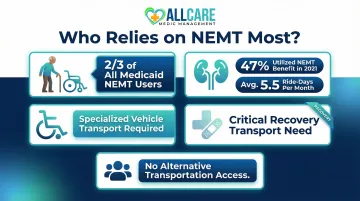
- Two-thirds of Medicaid NEMT users are seniors or individuals with disabilities
- Dialysis patients with End-Stage Renal Disease use NEMT at the highest rates — 47% utilized the benefit in 2021, averaging 5.5 ride-days per month
- Wheelchair and stretcher users depend on specialized vehicles and drivers trained in safe transfers
- Post-operative patients often need wheelchair or stretcher transport with two-person crews for hospital discharge
- Low-income individuals without vehicle access who rely on Medicaid-covered NEMT to reach appointments
Types of Non-Emergency Medical Transportation Services
Ambulatory Transport
Ambulatory transport uses standard vehicles for patients who are mobile and can get in and out of a vehicle on their own or with minimal assistance. This is the most common and cost-effective NEMT mode, appropriate for patients who can walk independently or with the aid of a cane or walker. Drivers provide door-to-door or curb-to-curb assistance based on the patient's needs.
Wheelchair-Accessible Transport
Wheelchair-accessible vehicles are equipped with ramps or lifts and proper tie-down securement systems for patients using manual or power wheelchairs. According to RESNA WC-19 standards, wheelchairs must have four crash-tested securement points where 4-point strap tiedowns and hooks can be easily attached to prevent injury during transport.
Drivers must be trained and certified in wheelchair securement. The Community Transportation Association of America (CTAA) PASS certification (Passenger Assistance, Safety and Sensitivity) requires hands-on proficiency in:
- Wheelchair securement and lift operation
- ADA compliance procedures
- Passenger assistance techniques for mobility-impaired riders
Stretcher/Supine Transport
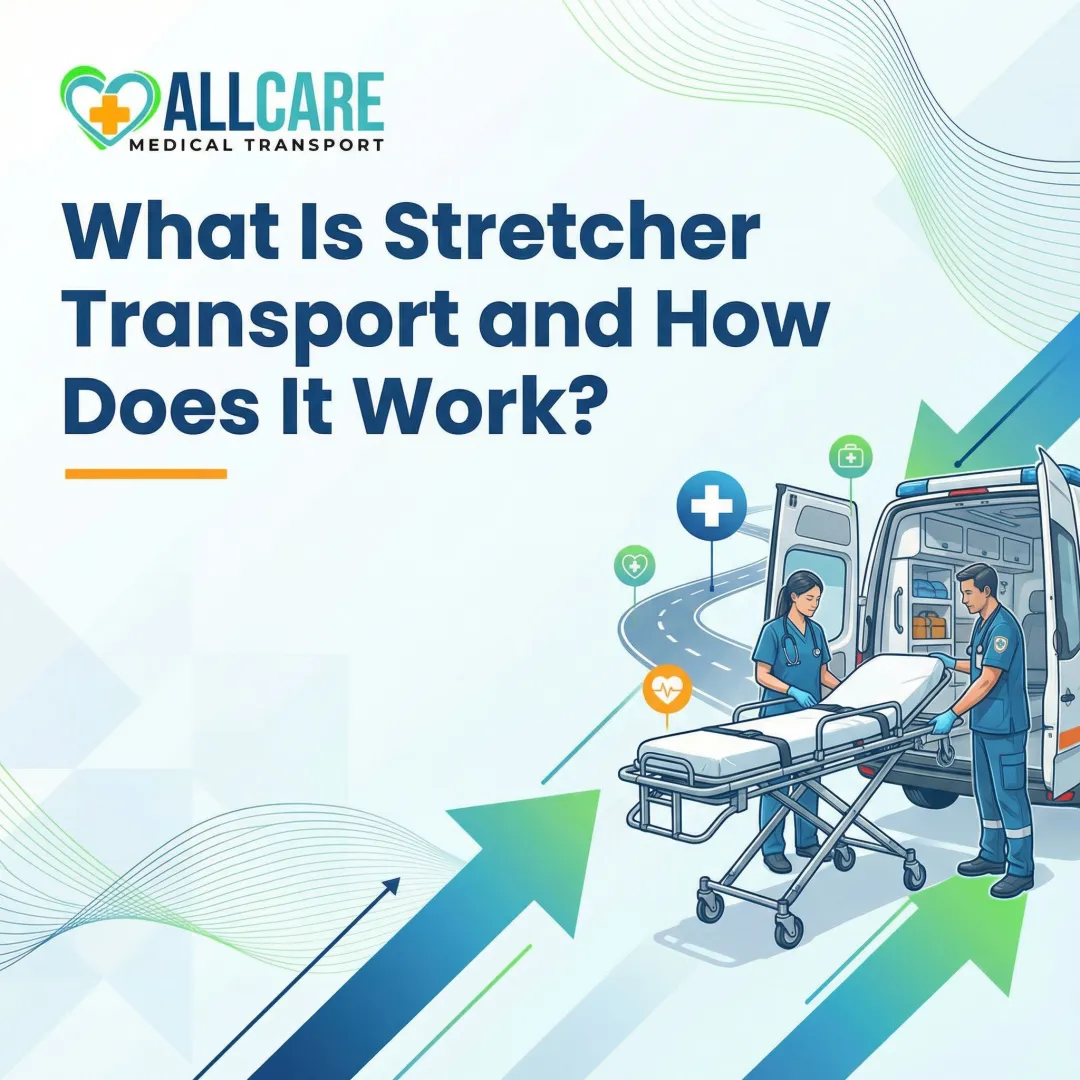
Stretcher transport serves patients who must remain lying flat during travel, typically post-surgery or for those who cannot sit upright due to medical conditions. This service requires specially equipped vehicles with medical stretchers and a two-person crew to load, secure, and unload patients safely.
Long-Distance Transport
Long-distance NEMT is available for inter-facility transfers or out-of-state medical trips. These trips are coordinated through providers with nationwide capabilities and may involve any of the three transport modes above depending on the patient's mobility level.
Best Practices for NEMT Coordination
Schedule Rides as Far in Advance as Possible
Book rides at least 48–72 hours ahead, especially for recurring appointments like dialysis or chemotherapy. State Medicaid programs and brokers require this advance notice to efficiently match patients with appropriate vehicles and drivers.
Requirements vary by state: New York and Florida generally require 72 hours (three business days) for routine trips, while Texas and some California plans require 48 hours.
NEMT is non-emergency by definition and is not designed for on-demand service. Last-minute requests strain provider resources and increase the likelihood of service failures. Same-day or urgent requests are typically accommodated only for hospital discharges, urgent care visits, or acute medical situations.
Establish Clear and Accurate Patient Information Upfront
Incorrect or incomplete information leads to wrong vehicle assignments, missed pickups, and real safety risks. When booking, have the following ready:
- Patient's full name and contact information
- Complete pickup and drop-off addresses with any special parking or entrance instructions
- Appointment time (not just the desired pickup time—providers calculate backward from your appointment to determine pickup)
- Mobility needs: ambulatory, wheelchair (manual or power), or stretcher
- Any medical equipment being transported (oxygen tanks, walkers, portable dialysis equipment)
- Behavioral or cognitive considerations the driver should know about (dementia, hearing impairment, language preferences)
A simple example: sending a standard van for a wheelchair user because mobility needs weren't specified isn't just inconvenient — it cancels the trip entirely.
Prioritize Driver Qualifications and Safety Standards
Verify that providers maintain minimum driver qualifications:
- CPR and First Aid certification — required to respond if a passenger has a medical event en route
- PASS certification — covers wheelchair and stretcher securement, lift operation, and passenger assistance for non-ambulatory riders
- Background checks — both national and local criminal screening to protect vulnerable passengers
- DOT physical compliance — confirms drivers meet federal medical fitness standards for commercial transport
- Drug testing — pre-employment, random, post-incident, and reasonable-suspicion testing using a minimum 5-panel screen
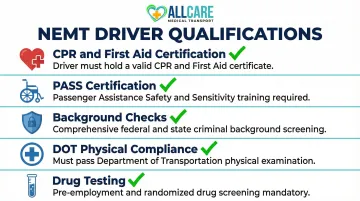
Providers like AllCare Medical Transport, serving Palm Coast and Flagler County since 2010, maintain these standards as part of their approved vendor status and employ only drivers who have passed all credentialing requirements.
Maintain Open Communication Between All Parties
Effective NEMT coordination relies on a three-way communication triangle:
- The patient or family
- The medical facility or discharge planner
- The NEMT provider
Breakdowns in any leg of this triangle — a facility that doesn't notify the provider of a discharge change, or a family that forgets to cancel — are leading causes of missed rides and the top complaints reported by beneficiaries and care managers.
Best practices:
- Confirm rides 24 hours in advance
- Notify the provider immediately if an appointment is rescheduled or canceled so transportation resources can be reallocated
- Provide a callback number that will be answered on the day of service
Build Contingency Plans for Disruptions
Before committing to a provider, ask upfront: What happens if a vehicle breaks down, a driver is unavailable, or traffic causes a significant delay? A reliable NEMT company should have protocols in place:
- Backup vehicles ready to deploy
- Dispatch rerouting capabilities to reassign nearby drivers
- Partner carrier agreements to cover overflow demand during peak periods
Verify whether the provider operates 24/7. That availability matters most for time-sensitive trips — early-morning dialysis runs, late-night hospital discharges, or weekend urgent care visits. AllCare Medical Transport maintains full dispatch and scheduling support at all hours to cover exactly those situations.
What to Look For in an NEMT Provider
Licensing, Insurance, and Compliance
Confirm the provider holds all required state business licenses and carries both commercial vehicle and general liability insurance. In Florida, providers must meet specific medical transport regulations, including Florida AHCA requirements under Rule 59G-4.330, which mandate:
- Level 2 fingerprint-based background checks through the Florida Department of Law Enforcement (FDLE) and FBI
- Minimum commercial auto insurance policy limits of $300,000 (though some counties require up to $1,000,000)
- Vehicle standards including ramps with 1:12 slope ratios and non-slip surfaces
Verify whether the provider holds approved vendor status with health plans or Medicaid programs in your area. That designation means the provider has cleared rigorous vetting and meets payer-specific credentialing standards — a strong baseline indicator of reliability.
Vehicle Quality and Accessibility Features
The fleet should be clean, well-maintained, and matched to the patient's specific needs. Key features include:
- Wheelchair lifts or ramps tested to ADA accessibility specifications under 49 CFR Part 38
- Stretcher capability with secure tie-down systems
- Climate control for patient comfort
- Safety restraints meeting RESNA WC-19 standards
Find out how frequently vehicles are inspected and serviced. Regular maintenance schedules prevent breakdowns and keep critical equipment — like lifts and restraints — reliable when it matters most.
Staff Credentialing Beyond the Basics
Look for providers whose entire team—not just select drivers—passes drug testing, holds current certifications, and receives training in client dignity, respect, and patient privacy. HIPAA compliance is a firm requirement when sharing medical details during booking — verify the provider has clear protocols to protect sensitive health information.
Beyond initial certification, ongoing driver training matters. Confirm whether staff receive continuing education in:
- Defensive driving techniques
- Passenger assistance protocols for elderly or frail clients
- Communication skills for working with cognitively impaired passengers
- Updates to wheelchair securement and accessibility standards
Reputation and Responsiveness
Research online reviews, request referrals from local hospitals or medical offices, and pay attention to how the company handles your first inquiry. Watch for these red flags:
- Slow or evasive responses to basic questions
- Vague or shifting pricing information
- Reluctance to provide credentials or insurance documentation
AllCare Medical Transport has served Palm Coast, Flagler County, and surrounding Florida communities since 2010. Owners Lisa and Tim Hogan founded the company after personally navigating the gaps in care while looking after their own aging family members — and that experience shapes how every transport is handled.
Service Area and Transport Range
Verify the provider can cover not just local trips but also longer-distance transfers if needed—such as inter-city medical appointments or out-of-state transfers. Confirm scheduling flexibility and whether round-trip service is included in the quoted price. Providers with nationwide capabilities offer peace of mind for patients who need specialized care at distant facilities.
How to Schedule and Prepare for Your NEMT Ride
What to Do Before Booking
Having the right information ready before you call speeds up booking and prevents last-minute scrambles on the day of the trip.
- Confirm the patient's mobility needs — walker, manual wheelchair, power wheelchair, or prone transport — so the provider dispatches the right vehicle
- Appointment address: Include parking, entrance, and floor-specific instructions for the facility
- Provide an emergency contact name and number for someone reachable if issues come up
- Special equipment: Note oxygen tanks, feeding tubes, or other medical equipment the patient needs during transport
On the Day of the Ride
- Be ready early: Have the patient ready at least 10–15 minutes before the scheduled pickup window
- Prepare mobility equipment: Ensure wheelchairs, walkers, or oxygen tanks are ready to load
- Keep a phone nearby — drivers may call to confirm arrival or provide timing updates
- If the appointment runs long, contact the provider right away to adjust return pickup timing
For Discharge Trips Specifically
Hospital discharge coordination requires extra attention:
- Notify the provider 24–48 hours before the expected discharge date — this ensures the right vehicle and crew are available
- Update the provider immediately if the discharge date shifts — even a one-day change can disrupt scheduling, so contact them right away to protect your slot
- Do not assume same-day discharge calls will be accommodated: Without prior coordination, providers may not have the appropriate vehicle or crew available, leaving patients stranded at discharge
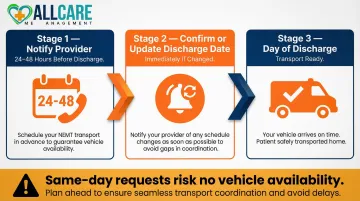
Discharge trips are the most time-sensitive requests a NEMT provider handles — the earlier you communicate, the more options you have.
Frequently Asked Questions
Does Medicare pay for non-emergency medical transportation?
Original Medicare (Parts A and B) generally does not cover routine NEMT to doctor's appointments. Medicare Part B covers ambulance services only when the patient's condition makes any other transportation medically contraindicated. However, some Medicare Advantage (Part C) plans offer NEMT as a supplemental benefit—43% of plans included transportation in 2023.
How much does Medicaid pay for non-emergency medical transportation?
Federal law under 42 CFR §431.53 requires Medicaid to cover NEMT for eligible beneficiaries with no other means of reaching covered services. Reimbursement rates vary by state and are negotiated between the state (or its broker) and the provider—total state and federal NEMT spending reached $2.6 billion in fiscal year 2018.
What is transport coordination?
Transport coordination is the process of organizing, scheduling, and managing rides for individuals who need assistance getting to and from medical appointments. Coordinators match the patient's mobility needs to the right vehicle type, driver qualifications, and timing to ensure safe, reliable transportation.
What are the types of non-emergency medical transportation?
The main types include ambulatory transport (standard vehicles for mobile patients), wheelchair-accessible transport (lift-equipped vans with securement systems), stretcher or supine transport (for patients who must remain lying flat), and long-distance or inter-facility medical transport for trips across cities or state lines.
What is the best vehicle for non-emergency medical transportation?
The best vehicle depends on the patient's mobility needs:
- Ambulatory patients: standard vans or sedans
- Wheelchair users: lift-equipped vans with 4-point securement systems
- Supine patients: stretcher-capable vehicles with tie-down equipment, often requiring a two-person crew
How do seniors who can't drive get around?
Common options include NEMT services for medical trips, community transit programs, Area Agencies on Aging volunteer driver networks, and family caregiver support. For medical appointments, a licensed NEMT provider ensures drivers are trained in passenger assistance and vehicles meet accessibility standards.
By scheduling in advance, providing complete patient information, verifying provider credentials, and keeping communication open, you can ensure safe, reliable rides to every medical appointment. Whether you're arranging a single hospital discharge or managing recurring dialysis trips, these best practices apply across the board.
For families in Palm Coast, Flagler County, and throughout Florida, AllCare Medical Transport offers licensed, insured transportation with PASS-certified drivers available 24/7. Call (386) 864-7145 for a free quote or to schedule your ride today.