Introduction
Picture this: a patient is cleared for discharge after surgery, but sitting upright for even a short car ride is impossible. A wheelchair won't work. A standard rideshare is out of the question. This is exactly the situation stretcher transport is designed for — safe, non-emergency medical transportation for patients who must remain lying flat.
Stretcher transport serves people dealing with severe back injuries, post-surgical recovery, advanced neurological conditions, and other situations where seated travel poses a real health risk.
Most people only connect stretchers with emergency ambulances — but the majority of stretcher transport trips are scheduled, non-emergency rides to medical appointments, facility transfers, or home. Knowing how this service works before you need it makes an already stressful situation much easier to navigate.
This guide covers what stretcher transport is, who qualifies, how the process works from booking to drop-off, and what to look for when choosing a provider in Florida.
TLDR
- Stretcher transport is non-emergency medical transportation for patients who must remain lying down due to injury, illness, recovery, or disability
- Unlike ambulances, it serves medically stable patients who need positioning support, not emergency care
- Typical users include post-surgery patients, seniors, hospice patients, and those with chronic mobility conditions
- Medicaid and Medicare may cover costs when medical necessity is documented
- Process involves booking, assessment, safe transfer, monitored transport, and drop-off at the destination facility or home
What Is Stretcher Transport?
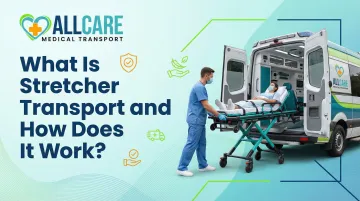
Stretcher transport is a specialized non-emergency medical transportation (NEMT) service where patients travel lying flat on a padded stretcher inside a purpose-equipped vehicle, with trained staff providing safe handling and basic monitoring throughout the trip. Between 2018 and 2021, approximately 3 to 4 million Medicaid beneficiaries utilized NEMT annually, with stretcher transport representing a vital service mode for bed-confined patients.
It is not an ambulance, does not respond to life-threatening emergencies, and does not provide paramedic-level intervention. Emergency ambulances are staffed by EMTs or paramedics with medical equipment for treatment during transport, while stretcher transport focuses on safe, comfortable transit for medically stable individuals who cannot sit upright.
Standard vehicles — cars, rideshares, taxis — are unsuitable for patients who cannot sit upright. Ambulances are expensive and reserved for emergencies. Stretcher transport fills the gap between these two options.
In Washington State, a 2024 pilot program realized between $300 and $700 in savings for each trip transferred from special-contract ambulances to NEMT stretcher vehicles, demonstrating the cost-effectiveness and appropriateness of this service level.
Providers typically offer two service models:
- Door-through-door: Staff enter the home or facility, assist the patient from their room to the vehicle, and escort them into the destination.
- Curb-to-curb: Staff assist at the vehicle but not inside the building.
For stretcher-dependent patients, door-through-door is the standard expectation and the appropriate level of care.
How Does Stretcher Transport Work?
Stretcher transport follows a defined sequence from initial booking through patient delivery. Each stage is designed around comfort, safety, and the patient's specific medical context.
Booking and Intake
The process begins when a patient, family member, hospital discharge coordinator, or care facility contacts the transport provider. The intake process requires key details:
- Patient's condition and mobility limitations
- Required equipment (oxygen, IV lines, feeding tubes)
- Pickup and destination addresses
- Preferred timing (scheduled or same-day)
Providers offer scheduled bookings for planned medical appointments and facility transfers, as well as urgent dispatch options for time-sensitive but non-emergency needs. AllCare Medical Transport in Palm Coast serves patients 24/7 throughout Florida, accepting bookings by phone at (386) 864-7145 or through their online reservation system.
Arrival and Patient Assessment
On arrival, a trained transport team arrives at the pickup location with the stretcher and any required medical equipment. They conduct a brief assessment of the patient's condition and positioning needs, then communicate clearly with the patient and any accompanying caregivers.
That assessment directly shapes the setup: stretcher incline, safety harness positioning, and which equipment travels in the vehicle. Providers following NEMTAC (Non-Emergency Medical Transportation Accreditation Commission) standards maintain documented policies and inspection logs for all stretcher equipment.
Safe Transfer and Loading
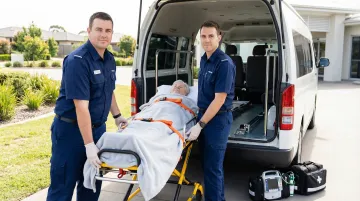
Trained staff use proper body mechanics and, when needed, additional equipment (transfer boards, lift assists) to move the patient from their bed or chair onto the stretcher. They then load and secure the stretcher inside the transport vehicle using locking floor systems that prevent movement in transit.
NEMTAC standards require drivers to complete Stretcher Operations Training, including hands-on demonstration of skills with the equipment used for passengers, ensuring every transfer meets safety benchmarks.
In-Transit Care and Monitoring
Throughout the trip, staff keep the patient secured, observed, and comfortable in a climate-controlled vehicle. Key safeguards in transit include:
- CPR and first aid training for all transport staff
- Direct communication with receiving facilities or emergency services if conditions change
- Continuous monitoring to catch and respond to non-emergency health changes
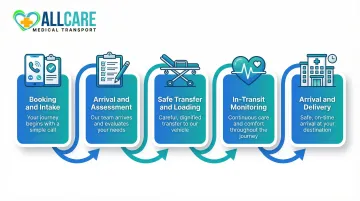
Arrival and Delivery
Upon arrival, staff unload the stretcher and transfer the patient safely to their destination—bed, exam table, or care facility room. They hand off relevant patient information to receiving staff and confirm the patient is comfortable and settled before departing.
Who Needs Stretcher Transport?
Stretcher transport is appropriate for any medically stable patient who cannot safely travel in a seated position—a larger group than most families realize.
Most common patient types:
- Post-surgical patients who must remain reclined to protect healing incisions or tissue
- Elderly individuals who are bedridden or lack the strength to sit upright for extended periods
- Patients with neurological, orthopedic, or chronic conditions such as severe back pain, advanced arthritis, MS, or stroke recovery that make seated travel painful or unsafe
- Hospice or palliative care patients being transferred between facilities or returning home
According to the National Hospice and Palliative Care Organization, 1.72 million Medicare beneficiaries were enrolled in hospice care in 2022, often requiring transport between facilities and home.
Non-obvious use cases:
- Routine medical appointments—dialysis, chemotherapy, wound care—where the patient is stable but cannot sit upright. The USRDS reports 131,194 incident ESRD cases in 2022, representing a population with frequent, recurring transport needs.
- Significant life events like family gatherings for patients in recovery or long-term care
- Long-distance transfers between states or across Florida when standard vehicles or ambulances are not practical
Relationship to EMS:
By handling medically stable patients who simply need positional support, NEMT stretcher services free up ambulances and paramedic units for true emergencies. This benefits the broader healthcare system, not just the individual patient.
What to Look for in a Stretcher Transport Provider
Certifications and Qualifications
Verify before booking:
- CPR and First Aid certification for all staff, at minimum
- PASS certification — the industry standard for wheelchair and stretcher transport operations
- DOT physicals, drug testing, and background checks for all drivers and attendants
- Commercial and general liability insurance
Practical Service Factors
- 24/7 availability matters for hospital discharges and time-sensitive transfers
- Local and long-distance transport capability
- Door-through-door service is essential for patients who cannot mobilize independently
AllCare Medical Transport in Palm Coast is available around the clock, holds PASS certification, and is fully licensed to serve patients across Florida and beyond—serving families in Flagler County, Alachua County, St. Augustine, and Daytona Beach.
Bariatric Transport Capability
If the patient requires bariatric transport, ask about this directly before booking. It involves specialized stretcher equipment and additional staffing that not every provider carries. Confirming availability upfront avoids last-minute scrambles on the day of the trip.
Does Insurance Cover Stretcher Transport?
Medicaid Coverage
Under federal law (42 CFR 431.53), Medicaid covers non-emergency medical transportation including stretcher transport as a federally mandated benefit. Coverage applies to trips deemed medically necessary — meaning the patient has a documented condition that prevents seated transport and is traveling to or from a covered medical service.
In Florida, all NEMT services must be coordinated through state-contracted transportation brokers such as Modivcare or MTM. Patients don't submit prior authorization forms directly to the state. Instead, the broker screens each request for medical appropriateness before dispatching a stretcher van.
Medicare Coverage
Medicare Part B may cover stretcher transport under specific conditions — primarily when the patient's condition makes any other form of transport medically contraindicated and the destination is a medical facility. However, Medicare does not have a separate payment category for "stretcher vans"; payment is based on the level of medically necessary service furnished, such as Basic Life Support (BLS) Non-Emergency.
To qualify, the patient must meet Medicare's bed-confinement definition — all three of the following must apply:
- Cannot get up from bed without assistance
- Cannot ambulate independently
- Cannot sit in a chair or wheelchair
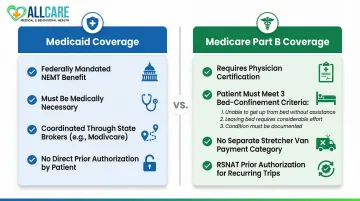
For scheduled, repetitive transports, providers must obtain a Physician Certification Statement (PCS) dated no earlier than 60 days before the service. CMS also runs a Repetitive, Scheduled Non-Emergent Ambulance Transport (RSNAT) Prior Authorization program, which applies to ongoing transport arrangements.
Out-of-Pocket Costs
For patients without qualifying insurance, stretcher transport is still far more affordable than an ambulance. To understand your out-of-pocket costs, contact your insurance provider directly — and ask the transport company whether payment plans or sliding-scale fees are available. A provider like AllCare Medical Transport can help walk you through coverage questions before your trip is scheduled.
Conclusion
Stretcher transport exists because medically stable patients who cannot sit upright deserve safe, dignified transportation built specifically for their needs. The right provider brings proper equipment, trained staff, and a level of care that reflects the seriousness of every trip.
If you or a family member in Florida needs stretcher transport, AllCare Medical Transport has served Palm Coast and surrounding communities since 2010—founded by Lisa and Tim Hogan after their own experience navigating care for aging family members.
- Available: 24/7, every day of the year
- Certified: PASS-certified, CPR/First Aid trained, fully licensed in Florida
- Service areas: Palm Coast, Flagler County, Alachua County, St. Augustine, Daytona, and beyond
- Phone: (386) 864-7145
- Website: allcaremedicaltransport.com
Frequently Asked Questions
What is stretcher transportation?
Stretcher transportation is non-emergency medical transport where medically stable patients who cannot sit upright ride lying flat on a padded stretcher inside a specially equipped vehicle, assisted by trained staff.
What is the difference between stretcher transport and an ambulance?
Ambulances respond to emergencies and carry paramedic-level medical staff with treatment equipment. Stretcher transport serves stable patients who need lying-down positioning and basic monitoring—making it more affordable and appropriate for routine transfers and appointments.
Does Medicaid cover stretcher transportation?
Yes, Medicaid covers NEMT stretcher transport as a mandatory benefit when the trip is medically necessary. In Florida, all trips must be coordinated through state-contracted brokers. Authorization requirements and eligibility criteria vary by state, so confirm with your Medicaid plan.
How much does Medicare pay for stretcher transportation?
Medicare Part B may cover stretcher transport when a physician certifies that seated transport is medically contraindicated and the destination is a qualifying facility. For current reimbursement rates, check the Ambulance Fee Schedule on CMS.gov or contact your Medicare plan directly.
How can I get free stretcher transportation?
Medicaid-enrolled patients may receive covered stretcher transport through their state's NEMT benefit. Some non-profits, hospital systems, and community programs also offer subsidized transport. Ask your healthcare provider or social worker about available options in your area.
What should I prepare before a stretcher transport ride?
A few steps make the pickup go smoothly:
- Have the patient's medical records and medication list ready
- Inform the provider of any equipment needs (oxygen, IV lines) at booking
- Clear a wide path for the transport team through doorways and hallways
- Have a caregiver or family member present if possible