Introduction
When a loved one needs to see a specialist or get routine lab work done, many families hit an immediate wall: does the nursing home handle transportation, or is that on you? It's one of the most common — and least discussed — gaps in nursing home care planning.
The short answer: it depends. Many nursing homes offer some form of transportation, but coverage varies widely by facility, appointment type, and distance. Some include transport in monthly fees; others charge per trip or rely on third-party providers.
When a facility's service falls short — due to scheduling conflicts, service area limits, or vehicles not equipped for complex mobility needs — families are often left scrambling at the last minute.
TLDR
- Most nursing homes provide some medical transportation, but coverage is not universally guaranteed
- Policies vary widely—some bundle transport into fees, others charge per trip
- Common limits include restricted service areas, advance scheduling requirements, and no same-day availability
- Non-Emergency Medical Transportation (NEMT) fills gaps when nursing home transport is unavailable
- In Florida, NEMT services operate 24/7 and can cover both local and long-distance medical trips nursing homes typically cannot
Do Nursing Homes Provide Transportation to Doctor's Appointments?
Yes, but it depends. Most skilled nursing facilities and assisted living communities offer some form of transportation to medical appointments, but the extent of service varies significantly from facility to facility. The type of facility, state regulations, and the facility's own policies all determine what transportation residents can expect.
Nursing Homes vs. Assisted Living: Key Differences
Skilled nursing facilities (nursing homes) typically have physicians, nurse practitioners, and nursing staff on-site. That reduces — but doesn't eliminate — the need for off-site appointments. Residents still require specialist care, diagnostic imaging, and lab work not available within the facility.
Assisted living communities provide less on-site medical care, so residents travel to external providers more frequently for both routine and specialty appointments.
Types of Appointments Typically Covered
When nursing homes do offer transportation, they typically arrange it for:
- Routine physician visits and follow-up appointments
- Specialist referrals (cardiology, orthopedics, neurology)
- Lab work and diagnostic imaging (X-rays, MRIs, CT scans)
- Dialysis treatments
- Physical and occupational therapy at external clinics
- Dental and eye care appointments
How Transportation Is Arranged
Transportation is generally scheduled 24 to 72 hours in advance and usually involves a facility-owned van or a contracted driver. Some facilities provide staff assistance for residents who use wheelchairs or have mobility limitations — but availability varies, so confirm this directly with the facility before relying on it.
State Regulations Requiring Transportation
Several states require senior care facilities to offer or arrange transportation services. Florida law requires skilled nursing facilities to arrange transportation for residents who retain their personal physician for medically necessary services like physical therapy. Florida Statutes Chapter 400 also mandates that SNFs maintain emergency management plans covering evacuation and post-disaster transportation.
Assisted living facilities in Florida must "provide assistance in making arrangements for appointments and transportation to appropriate medical, dental, nursing, or mental health services" — and either provide or arrange transport through family, volunteers, taxis, or specialized agencies.
Other states with similar requirements include:
- Indiana
- North Carolina
- Oregon
- Pennsylvania
How Do Nursing Homes Charge for Transportation?
Understanding pricing before move-in prevents billing surprises later. Nursing homes typically use one of two models:
- All-inclusive: Transportation is bundled into the monthly fee with no extra charge for trips within a defined service area. Predictable, but often capped by frequency or distance limits.
- À la carte: Residents are billed per trip or per mile — typically $25 to $75 per one-way trip. Wheelchair and stretcher transport usually cost more than ambulatory rides.

Before signing, ask how many trips are included per month, what the overage charge is, and whether specialized transport (wheelchair, stretcher) costs extra.
Common Limitations of Nursing Home Transportation
Even when facilities offer transportation, several practical constraints can leave residents without a ride when they need one most.
Fixed Scheduling
Most nursing homes operate transportation on a fixed schedule—specific days of the week designated for medical trips. If a resident's appointment doesn't align with the facility's transportation days, they may have to wait days or even weeks for the next available slot. This can push specialist visits or follow-up care back by a week or more.
Service Area Restrictions
Most facilities only transport residents within a defined geographic radius—often 10 to 20 miles. This becomes a problem when residents need to see specialists in a different county. A resident in Palm Coast, for instance, may have no facility-covered option if their cardiologist is in Jacksonville or Orlando.
Same-Day and Urgent Appointments
Nursing home transportation is rarely available on short notice. Facilities typically require 24 to 72 hours advance notice — Florida Medicaid policy allows providers to require reservations up to three business days in advance. When a resident needs a last-minute or urgent follow-up visit, the facility often has no immediate option to offer.
Accessibility Limitations:
While many facilities have wheelchair-accessible vans, not all are equipped for residents who require:
- Stretcher transport for those unable to sit upright
- Oxygen support during transit
- Trained medical attendants for complex medical needs
Residents with these requirements may not be safely accommodated by standard facility vehicles.
Staffing Constraints:
Nursing home drivers and aides are often pulled to cover other duties, particularly when facilities are short-staffed. Transportation can be delayed or cancelled with little notice — and when that happens, families are left scrambling to find last-minute alternatives.
How NEMT Services Fill the Gap for Nursing Home Residents
When a nursing home's internal transportation falls short, Non-Emergency Medical Transportation (NEMT) provides a reliable alternative.
What is NEMT?
NEMT is a specialized transport service for individuals with medical conditions or mobility challenges who don't require an ambulance but need more than a standard rideshare. Under federal regulations (42 CFR § 440.170), NEMT includes wheelchair vans, stretcher cars, secured transportation for disabled individuals, and other specialized vehicles.
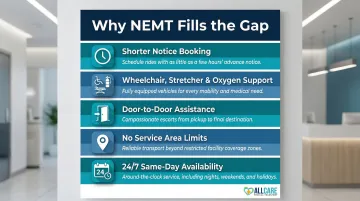
NEMT providers offer several advantages over nursing home-provided transportation:
- Book on shorter notice than facility-scheduled transport
- Accommodate wheelchair, stretcher, and oxygen-dependent passengers
- Provide door-to-door assistance from the resident's room to the vehicle and back
- Transport residents to any medically necessary destination, with no service area limits
- Operate 24/7 for same-day and after-hours needs
NEMT providers also coordinate directly with facilities, handling scheduling and pickup coordination directly with staff. Vehicles are staffed by trained medical transport specialists who understand the needs of elderly and medically complex passengers. Drivers are CPR-certified and background-checked throughout the journey.
Insurance and Medicaid Coverage
Florida Medicaid provides NEMT benefits for all eligible recipients who have no other means of transportation to access Medicaid-covered services. Coverage includes wheelchair vans, stretcher transport, taxis, and transportation network companies.
Between 2018 and 2021, approximately 3 to 4 million Medicaid beneficiaries used NEMT annually, representing 4% to 5% of all Medicaid enrollees. For eligible nursing home residents, that means transportation to medically necessary appointments at no out-of-pocket cost.
For families trying to arrange reliable transport, knowing a covered option exists makes a real difference — especially when specialist appointments require travel outside the county.
AllCare Medical Transport in Florida
AllCare Medical Transport serves nursing home residents in Palm Coast, Flagler County, and surrounding Florida areas. The company offers:
- Available 24/7, including same-day and after-hours bookings
- PASS-certified vehicles equipped for wheelchair and stretcher transport
- CPR/First Aid certified staff trained in senior and medically complex care
- Background-checked drivers who pass DOT physicals and national screening
- Long-distance transport for out-of-county specialist appointments
AllCare coordinates directly with nursing home staff for scheduling and pickup, so residents and families aren't left managing logistics on their own.
What to Ask a Nursing Home About Their Transportation Policy
Before choosing a nursing home or when evaluating your loved one's current facility, ask these critical questions:
Pricing and Coverage:
- Is transportation to off-site appointments included in the monthly fee, or is it charged per trip?
- How much do you charge per trip, and are there mileage fees?
- Are there limits on the number of trips per month?
Scheduling and Availability:
- How far in advance must rides be scheduled?
- Do you offer same-day or after-hours transportation?
- What happens if I need to reschedule an appointment?
Service Area:
- What is your service area or radius?
- Can you transport residents to specialists in other counties?
- Are there destinations you don't cover?
Accessibility:
- Are your vehicles wheelchair accessible?
- Do you have stretcher-capable vehicles?
- Can you accommodate residents who need oxygen or other medical equipment during transit?
Staffing and Safety:
- Will a staff member accompany my loved one to the appointment?
- Are drivers trained in CPR and First Aid?
- What happens if your vehicle or driver is unavailable?
Have a Backup Transportation Plan Ready
Ask whether the facility works with a vetted non-emergency medical transportation (NEMT) partner for trips outside their coverage area or when their vehicles aren't available. Get that backup option identified before you need it — whether that's a trusted family member, a Medicaid transportation benefit, or a local NEMT provider like AllCare. A plan in place means a missed appointment stays off the table.
Frequently Asked Questions
Does Medicare or Medicaid cover transportation to doctor's appointments for nursing home residents?
Medicaid typically covers NEMT for eligible nursing home residents traveling to medically necessary appointments, including those in Managed Medical Assistance or fee-for-service plans. Medicare Part B covers emergency ambulance transport and, in limited cases, non-emergency ambulance rides when other transport methods would endanger the patient's health.
What should I do if my loved one's nursing home doesn't provide transportation to their appointment?
Contact a licensed NEMT provider like AllCare Medical Transport to arrange safe, professional transport. If your loved one is Medicaid-eligible, their NEMT benefit may cover the cost — and professional services bring trained staff, accessible vehicles, and proper insurance that a personal car can't match.
Can nursing home residents use rideshare services like Uber or Lyft to get to appointments?
Rideshare apps are an option for ambulatory residents who can walk independently, but they're not appropriate for residents using wheelchairs, stretchers, or requiring medical equipment during transit. NEMT providers carry the right vehicles, trained staff, and safety equipment for passengers with medical or mobility needs — something rideshares simply aren't built to handle.
How far in advance should I schedule transportation from a nursing home to a medical appointment?
Nursing home-provided transportation typically requires 24–72 hours advance notice. NEMT providers often accommodate shorter notice, with some offering same-day bookings. Book as early as possible to secure availability, especially for specialist appointments or trips outside the facility's service area.
Will someone from the nursing home accompany my loved one to the appointment?
Some nursing homes send a staff member for residents who need assistance, but this isn't guaranteed. NEMT providers typically offer door-to-door assistance and can stay with the resident during transport, ensuring your loved one has support throughout the trip even when facility staff can't come along.
What is the difference between NEMT and an ambulance service?
Ambulances are for medical emergencies requiring immediate clinical intervention, such as cardiac events or severe injuries. NEMT is for non-emergency medical trips where the passenger needs safe, assisted transport—such as dialysis, specialist visits, or routine checkups—but not emergency care.