Introduction
Moving a seriously ill or mobility-limited loved one across state lines — or even across Florida — raises an immediate question: how do you get them there safely? When a family member needs to reach a specialized treatment center, return home after a hospital stay, or transfer to a long-term care facility hundreds of miles away, standard transportation simply isn't safe or comfortable enough.
Long-distance medical transport was built for situations like these. Also called non-emergency medical transport (NEMT), this service provides planned, monitored travel over significant distances — typically 150 to 200+ miles — using specially equipped vehicles staffed by trained professionals.
This guide is for families of seniors, hospital discharge patients, hospice patients, and individuals with special needs weighing whether long-distance medical transport is the right choice — covering real benefits, genuine drawbacks, and what to look for in a provider.
TLDR: Key Takeaways
- Long-distance NEMT provides safe, monitored travel for patients who can't use standard transportation
- Main advantages include professional medical oversight, door-to-door service, and comfort for passengers with mobility needs
- Drawbacks include higher cost, advance planning requirements, and limited insurance coverage
- Works best for medically stable patients who require care continuity during travel
- Choose licensed, credentialed, 24/7 providers for reliable transport
What Is Long-Distance Medical Transport?
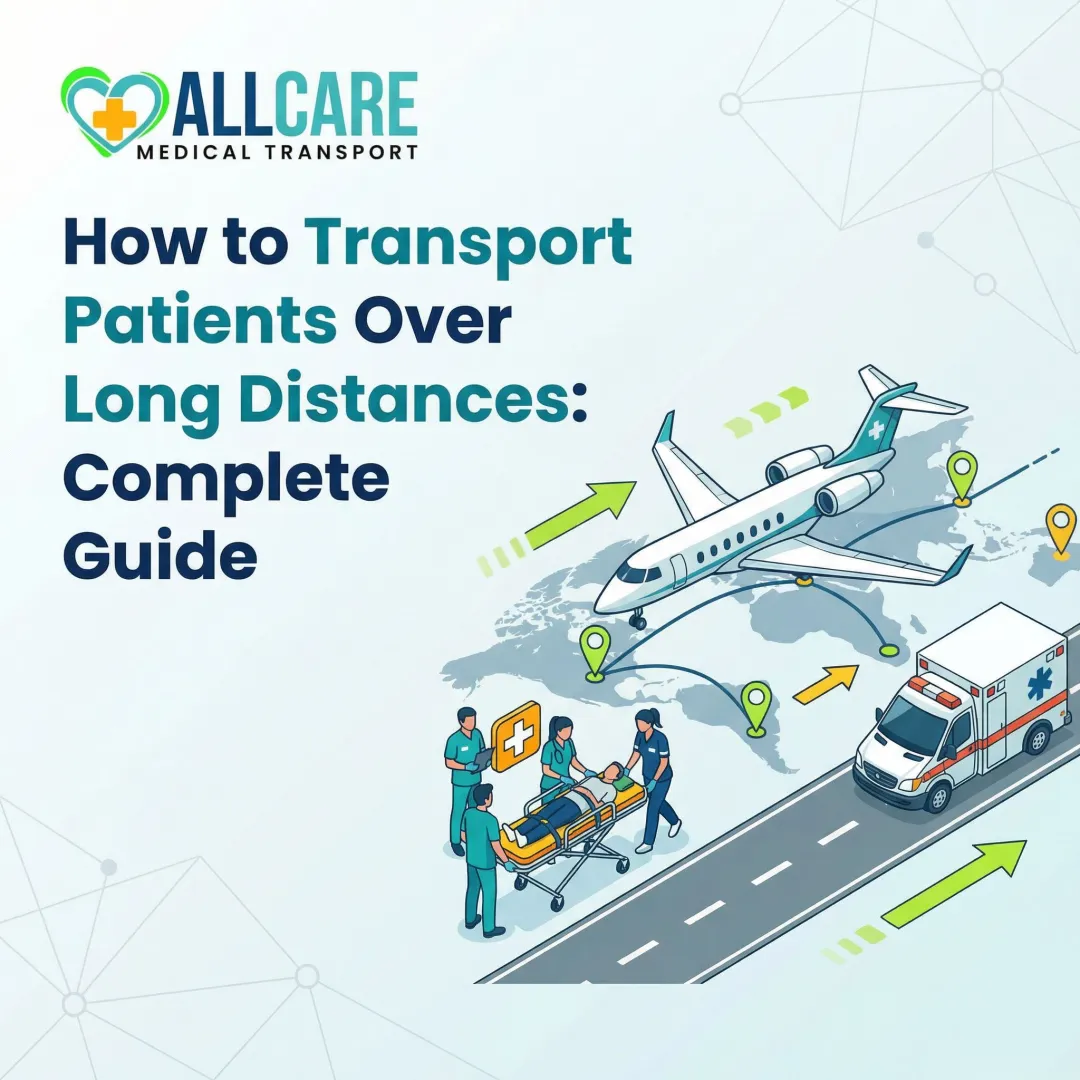
Long-distance medical transport—also called non-emergency medical transport (NEMT)—involves moving a stable patient over a significant distance, commonly defined as 150-200+ miles, using specially equipped vehicles staffed by trained professionals.
This is not the same as emergency ambulance or 911 services—a distinction that trips up most families. NEMT is planned, scheduled travel focused on comfort and care continuity, not urgent medical intervention. You book it in advance when your loved one is medically stable but cannot safely ride in a standard vehicle for hours.
Two Main Transport Modes
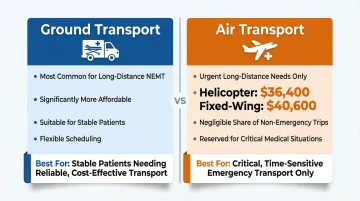
- Ground transport — Wheelchair vans and stretcher vehicles. Far more common for long-distance NEMT and significantly more affordable than air options.
- Air transport — Air ambulances for urgent long-distance needs. These account for a negligible fraction of non-emergency trips, with median charges of $36,400 for helicopter and $40,600 for fixed-wing aircraft.
The Pros of Long-Distance Medical Transport
Medically Supervised Travel
Unlike riding in a family car, NEMT vehicles are staffed by trained professionals—CPR/First Aid certified attendants, mobility-certified drivers, or EMTs depending on the service. The patient is monitored throughout the journey, not just dropped off.
For seniors, post-surgical patients, and hospice patients, that continuous monitoring matters — medical changes during travel are real and can happen without warning. NEMTAC national standards require drivers to maintain current CPR/AED and First Aid certification (recertified every 2 years), plus mandatory wheelchair and stretcher securement training with practical demonstrations.
Properly equipped vehicles accommodate oxygen, medical-grade stretchers, wheelchairs, and other equipment — so the patient's existing care routine stays intact throughout the trip.
Door-to-Door Comfort and Dignity
Full door-to-door—often "bed-to-bed"—service eliminates the exhausting transfers, waiting rooms, and coordination gaps that come with other travel modes like flying or driving. Patients are picked up from one facility or residence and delivered to another with minimal disruption.
Comfort accommodations include:
- Hospital-grade beds and medical stretchers
- Climate-controlled vehicles
- Room for personal belongings
- One family member can ride along at no extra charge
Access to Specialized Care Anywhere
Long-distance NEMT opens access to specialized hospitals, treatment centers, and long-term care facilities that may be hundreds of miles away. For patients in rural Florida — or anyone needing to relocate closer to family — that reach can be the difference between getting care and going without.
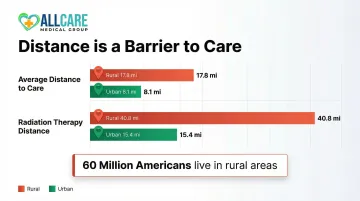
Approximately 60 million Americans live in rural areas, where medical care access is dramatically limited. That gap shows up in the numbers: rural residents travel more than twice the distance of urban residents — 17.8 miles vs. 8.1 miles — for medical or dental care, spending nearly 9 more minutes in transit each way.
State-to-state transport removes that barrier entirely — patients can reach cancer centers, cardiac specialists, or skilled nursing facilities regardless of geography. For oncology patients, the stakes are high: rural patients travel nearly three times as far for radiation therapy (40.8 miles vs. 15.4 miles), and that distance directly affects treatment adherence and outcomes.
Peace of Mind for Families
A multi-hour drive with a medically fragile loved one is stressful for everyone involved. Long-distance NEMT removes that burden — families can ride along or meet at the destination while trained professionals manage the journey.
Reputable providers offer features like live vehicle tracking and regular updates that reduce anxiety during a long trip. Family members don't have to worry about navigating rest stops, managing medical equipment, or responding to sudden changes in condition—trained specialists handle these challenges.
The Cons of Long-Distance Medical Transport
Higher Cost Compared to Alternatives
Long-distance NEMT is a premium service. Ground transport costs vary widely based on distance, level of care required, staffing, fuel, and overnight accommodations if needed. Request itemized quotes from at least two providers before committing.
Air ambulances cost significantly more—often $12,000–$90,000 per trip, with some bills exceeding $122,000. They are rarely necessary for non-emergency situations.
For families who could safely transport a loved one by personal vehicle, NEMT represents a significant additional expense. That comparison only holds when the patient is genuinely stable enough for standard travel. Most people considering NEMT are not.
Limited Insurance and Medicare Coverage
Standard Medicare Part B typically covers non-emergency NEMT only when it is deemed "medically necessary" and documented as such.
To qualify, the patient must be bed-confined — unable to get up, walk, or sit in a chair without assistance — or have a condition that makes other transport methods unsafe.
Important: Medicare explicitly does NOT cover wheelchair van transportation or ambulettes, which are the most common long-distance NEMT vehicles.
Many Medicare Advantage plans offer broader transportation benefits—67% of Special Needs Plans (SNPs) offered transportation in 2026, but only 24% of standard Medicare Advantage plans did (down from 30% in 2025). Verify your specific plan before booking.
Private insurance coverage for long-distance NEMT varies significantly by policy. Patients are often responsible for a substantial out-of-pocket portion. Call your insurer directly to confirm coverage and any documentation requirements.
Advance Planning Required
Unlike calling a cab, reputable NEMT providers typically require booking 48-72 hours in advance (or more for complex long-distance trips). This industry norm is backed by state Medicaid programs:
- New York requires 72 hours for routine non-emergent trips
- Texas requires 48 hours (2 business days) for routine regional trips and 5 business days for out-of-county trips
Last-minute arrangements may limit provider options or result in higher costs. Advance notice allows providers to coordinate staffing, route planning, and any special equipment needs. Hospital discharges and facility decisions often happen on short notice — so if transport is likely, start the booking process before the discharge date is confirmed.
Physical and Logistical Demands of Ground Travel
Long ground trips — spanning many hours or even multiple days — can be tiring for medically fragile patients. Factors to consider include:
- Road conditions and extended time in a vehicle position
- Rest stops and bathroom breaks
- Overnight hotel stays for very long routes
- Weather events, traffic, and geographic challenges (especially relevant in Florida and across the Southeast)
Walk through these scenarios with both the transport provider and the patient's physician. A good provider will have handled similar trips before and can tell you what to expect.
Who Should Consider Long-Distance Medical Transport?
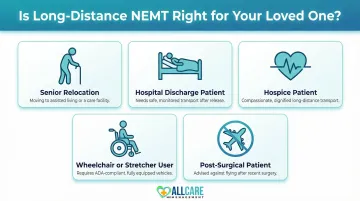
Long-distance NEMT is ideal for:
- Seniors being relocated to assisted living or skilled nursing facilities
- Patients discharged from hospitals who live far away
- Hospice patients needing compassionate transport
- Individuals with mobility limitations (wheelchair or stretcher users) who cannot safely ride in a standard vehicle for long distances
- Post-surgical patients whose physicians advise against air travel
Simple decision prompt: If the trip can be scheduled (not an emergency), the patient is stable with an existing care plan, and the primary challenge is distance or mobility—long-distance NEMT is likely a strong fit.
If the situation is a crisis or requires urgent medical intervention, call 911 instead.
Approximately 39% to 41% of all inpatient hospital discharges are followed by care at a skilled nursing facility, home health agency, or inpatient rehabilitation facility, and many of those patients travel significant distances to get there. Florida adds another layer: with 21.3% of residents aged 65 or older as of 2020, families here regularly face the snowbird dilemma of moving loved ones between states seasonally or permanently.
NEMT providers operating in Florida typically support both inbound and outbound interstate trips, which matters for families spread across multiple states who need reliable coordination on both ends of the journey.
How to Choose a Long-Distance Medical Transport Provider
Key Credentials to Verify
Before booking, verify these credentials:
Proper state licensure and insurance: Commercial and general liability coverage protects you if something goes wrong. Licensure ensures the provider meets state safety standards.
Staff certifications: CPR/First Aid, mobility certifications like PASS for wheelchair and stretcher transport ensure staff can respond to emergencies and properly secure medical equipment. NEMTAC standards require recertification every 2 years.
Background-checked and drug-tested employees: National and local background checks plus DOT physicals protect vulnerable patients from unqualified or unsafe personnel.
Approved vendor status with healthcare facilities: Hospitals and skilled nursing facilities have already vetted the provider's credentials — a meaningful third-party endorsement.
What a Trustworthy Provider Looks Like
AllCare Medical Transport, serving Palm Coast, Florida and beyond, meets these standards as an example of what families should expect:
- Fully licensed for medical transport in Florida
- CPR/First Aid certified staff
- PASS certified for wheelchair and stretcher transport
- Approved vendor status
- 24/7 availability
- All employees pass national background checks and DOT physicals
- 4.8-star rating from verified client reviews
Founded in 2010 by Lisa and Tim Hogan, the company was built around a simple belief: families should never feel uncertain about who's transporting their loved one.
Questions to Ask Providers
When you speak with a provider, ask:
- Can a family member ride along, and is there an extra charge?
- What equipment do they accommodate — oxygen, stretchers, wheelchairs?
- How do they handle unexpected route changes or medical changes en route?
- How much advance notice is required to book?
- Is pricing itemized and clearly explained upfront?
Cost and Insurance Coverage
What Affects the Cost of Long-Distance Medical Transport?
Pricing for ground NEMT is typically calculated based on:
- Distance traveled
- Level of medical attendant required
- Fuel costs
- Number of staff needed for extended trips
- Overnight accommodations
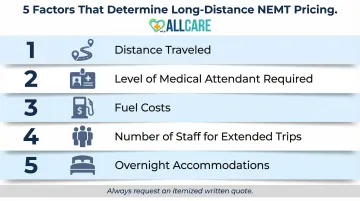
Unlike short trips (which use a base rate plus per-mile formula), long-distance trips are usually quoted individually. Always request an itemized written quote.
For context, Florida's non-emergency basic life support ambulance base rate is $137.96, though private-pay rates are typically higher. Texas Medicaid pays $27.06 per leg in urban counties and $63.71 per leg in rural counties—a gap that reflects how significantly location shapes your total cost.
For most non-emergency situations, ground transport is both sufficient and far more affordable than air ambulance, which typically starts at several thousand dollars even for short distances.
Does Insurance Cover It?
Medicare Part B covers emergency ambulance transport and may cover non-emergency transport when medically necessary (e.g., transport to a skilled nursing facility) with proper documentation from a physician. For scheduled, repetitive ambulance services, the supplier must obtain a Physician Certification Statement (PCS) dated no earlier than 60 days before service.
Medicare Advantage plans vary and often include broader transportation benefits than Original Medicare, so it's worth reviewing your specific plan's coverage before booking.
Action steps:
- Contact your insurance provider before booking
- Ask whether the specific type of transport is covered
- Request any required documentation from your physician
- Clarify your out-of-pocket responsibility upfront
Long-Term Care Insurance policies rarely cover transportation, though some may offer cash benefits that can be applied.
Frequently Asked Questions
How much does long distance medical transportation cost per hour?
Long-distance NEMT is rarely priced hourly—it is typically quoted as a flat rate per trip based on distance, staffing level, fuel, and any additional needs. Contact providers directly for an itemized quote based on your specific route and care requirements.
Does Medicare cover long distance medical transportation?
Medicare Part B may cover non-emergency transport when it is deemed medically necessary and supported by physician documentation. Coverage is not guaranteed for all long-distance NEMT situations. Verify your specific plan and secure your documentation before booking.
What are the 4 types of medical transportation?
The four main types are:
- Emergency ambulance — 911/EMS for life-threatening situations
- Non-emergency medical transport (NEMT) — wheelchair vans and stretcher vehicles for stable patients
- Air medical transport — air ambulances for urgent or very long-distance needs
- Medical escort services — a medical professional accompanying a patient on a commercial flight
What is the difference between emergency and non-emergency medical transport?
Emergency transport (911/EMS) is for urgent, life-threatening situations requiring immediate medical intervention. Non-emergency medical transport is planned, scheduled travel for stable patients focused on comfort, safety, and care continuity during the trip.
Can family members ride along during long-distance medical transport?
Most reputable NEMT providers allow one companion to ride along at no extra charge, and some accommodate additional companions for a small fee. Confirm the provider's specific companion policy when booking.
How far in advance should I book long-distance medical transport?
Most providers recommend at least 48-72 hours advance notice, with complex arrangements requiring more lead time to confirm staffing, equipment, and routing for the patient's specific needs.