
Introduction
Your mother has a follow-up appointment at the cardiologist next Tuesday. As you plan the trip, a simple question stops you: should you use the transport chair stored in the garage, or would a wheelchair be better?
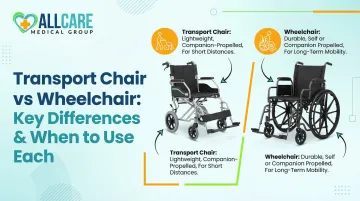
These two mobility aids look similar, but choosing the wrong one can compromise safety, exhaust caregivers, and leave users frustrated. The difference comes down to purpose: transport chairs are built for caregiver-assisted short trips, while wheelchairs support independent mobility for daily living.
This guide breaks down the core differences in design, weight, propulsion, and ideal use cases. You'll learn when each device makes sense based on the user's independence level, trip duration, and caregiver availability — so you can choose the right option for your situation.
TL;DR
- Transport chairs are lightweight, caregiver-pushed devices with four small wheels and no hand rims — users cannot self-propel
- Large rear wheels with hand rims define manual wheelchairs, giving users the ability to move without caregiver assistance
- The deciding factor: Can the user self-propel, or will a caregiver always be present?
- At 47-49% lighter than standard wheelchairs, transport chairs are significantly easier to lift and load into vehicles
- The right choice comes down to independence needs, trip frequency, and how long the user will be seated
What Is a Transport Chair?
A transport chair is a compact, lightweight mobility device specifically designed to be pushed by a caregiver. Unlike wheelchairs, transport chairs feature four small wheels — typically 8 inches in diameter — with no large rear wheels or hand rims, making self-propulsion impossible by design.
Physical Characteristics:
Transport chairs are built for portability, not independence. Most models weigh between 15 and 26 lbs, compared to standard manual wheelchairs that weigh over 36 lbs. For example:
- Medline Ultralight Transport Chair: 14.8 lbs (without footrests)
- Drive Medical Aluminum Transport Chair: 19 lbs
- Drive Medical Steel Transport Chair: 26 lbs
Construction typically includes a folding aluminum or steel frame, padded seat (17-19 inches wide), swing-away footrests, and push handles. The compact design makes these chairs narrower and easier to navigate through tight hallways, doorways, and cramped spaces.
Key Advantages:
- Easier vehicle loading — significantly lighter weight reduces caregiver strain when lifting into cars or vans
- Tighter maneuverability — narrower frame navigates crowded waiting rooms and narrow corridors with ease
- Lower cost — generally more affordable than manual wheelchairs, with prices ranging from $97 to $380
- Simple operation — straightforward for caregivers to push and steer
Limitations:
Transport chairs are not suitable for users who need any degree of independence. Without hand rims, the user cannot propel themselves even short distances — mobility depends entirely on a caregiver being present.
Key limitations to keep in mind:
- Short-term use only — clinical guidelines warn against prolonged daily seating due to pressure injury risks from basic sling-style seats
- No self-propulsion — hand rims are absent by design, ruling out any independent movement
- Fewer customization options — limited accessories and adjustability compared to standard wheelchairs
Use Cases for Transport Chairs
Transport chairs work best when a caregiver is present and the trip is brief:
- Medical appointments — short visits to doctors, specialists, or outpatient clinics
- Hospital intake and discharge — temporary mobility assistance during admission or release
- Airport navigation — getting through terminals when walking long distances isn't feasible
- Post-surgery recovery — short-term use while recovering strength and mobility
- Occasional outings — trips to restaurants, family gatherings, or shopping when an ambulatory user tires easily
If the user needs a chair for daily, full-time mobility, a standard wheelchair is the more appropriate choice — transport chairs simply aren't built for that level of sustained use.
What Is a Wheelchair?
A standard manual wheelchair is a mobility device designed for independent use. It features two large rear wheels (typically 24 inches in diameter) equipped with hand rims that allow the user to self-propel without caregiver assistance. Front caster wheels provide maneuverability and stability.
Physical Design
Manual wheelchairs are built for daily, long-term use. According to CMS definitions, standard manual wheelchairs (HCPCS K0001) weigh greater than 36 lbs. Real-world examples include:
- Invacare Tracer EX2: 36 lbs
- Drive Medical Silver Sport 1: 37.6 lbs
The physical build reflects that long-term demand:
- Sturdier frame and wider seat (standard widths: 16, 18, and 20 inches)
- Cushioned seat and backrest for all-day comfort
- Adjustable armrests and footrests
- Construction suited for indoor and outdoor terrain
Key Advantages
- Independence — users can move themselves without waiting for assistance
- Long-term comfort — enhanced padding and support make all-day use feasible
- Extensive customization — compatible with oxygen holders, lap trays, specialized cushions, storage bags, and other accessories
- Versatile environments — suitable for indoor and outdoor use, including uneven surfaces
Use Cases for Wheelchairs
Wheelchairs are the right choice for individuals with long-term or permanent mobility limitations who need to navigate daily life independently:
- Home mobility — moving through the house, accessing rooms, and performing daily activities
- Work or school — full-day use in professional or educational settings
- Outdoor environments — navigating sidewalks, parks, and community spaces
- Extended outings — shopping trips, social events, or activities requiring hours of seated mobility
- Users without consistent caregiver access — when family or professional support isn't always available
Transport chairs cover a different set of needs — particularly when a caregiver is always present and portability matters most.
Transport Chair vs. Wheelchair: Key Differences
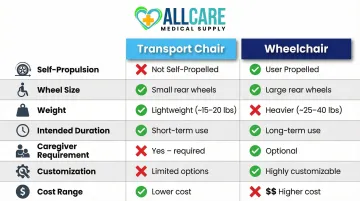
| Feature | Transport Chair | Wheelchair |
|---|---|---|
| Self-Propulsion | None — must be pushed by caregiver at all times | User can propel independently using hand rims on large rear wheels |
| Wheel Size | Four small wheels (typically 8 inches) | Two large rear wheels (20-24 inches) + front casters |
| Weight & Portability | 15-26 lbs — lighter and easier to lift | 36+ lbs — heavier and less portable |
| Intended Duration | Short trips, temporary use (appointments, errands) | Long-term, all-day use |
| Caregiver Requirement | Mandatory — caregiver must always be present | Optional — user can operate independently |
| Accessories/Customization | Limited options | Extensive (cushions, trays, oxygen holders, storage) |
| Typical Cost Range | $97–$380 | $135–$780+ |
Self-Propulsion: The Critical Difference
This is the most important functional distinction. Wheelchairs enable independent movement through hand rims attached to the large rear wheels — users grip these rims and push to move forward, backward, or turn. Transport chairs lack hand rims entirely, making self-propulsion impossible. A user cannot move a transport chair on their own, even a few feet.
Portability: Real-World Weight Comparison
Transport chairs are 47-49% lighter than standard manual wheelchairs, dramatically reducing caregiver strain during vehicle transfers:
| Manufacturer | Manual Wheelchair Model | Weight | Transport Chair Model | Weight | Difference |
|---|---|---|---|---|---|
| Drive Medical | Silver Sport 1 | 37.6 lbs | Aluminum Transport Chair | 19 lbs | 18.6 lbs lighter (49.4%) |
| Invacare | Tracer EX2 | 36 lbs | Lightweight Aluminum Transport | 19 lbs | 17 lbs lighter (47.2%) |
If you need to lift the chair into a car trunk or back seat multiple times per week, those 17-18 pounds make a meaningful difference.
Comfort and Long-Term Use
Weight savings matter for transport — but once you're seated for hours, what the chair is built for matters just as much. Standard wheelchairs are designed for extended sitting, with firm support structures, ergonomic positioning, and pressure-relieving cushions. Clinical guidelines from the National Pressure Injury Advisory Panel recommend specialized seating for individuals who spend prolonged periods in wheelchairs to prevent pressure injuries.
Transport chairs prioritize portability over sustained comfort. The basic sling seating is adequate for a 30-minute doctor's visit but not recommended for full-day use. NHS clinical guidance explicitly states that transport chairs are issued for outings and short journeys only — not as replacements for static seating.
Cost and Accessibility
Transport chairs are generally more affordable, making them appealing for temporary or occasional needs:
- Transport chairs: $97–$380 (entry-level steel to lightweight aluminum)
- Manual wheelchairs: $135–$780+ (basic models to customizable options)
Pricing varies based on materials, features, and brand. If the chair will only be used for occasional medical appointments or post-surgery follow-ups, the lower cost tier often makes more sense than investing in a full wheelchair setup.
Which Should You Choose? A Practical Decision Guide
Choose a transport chair if:
- A caregiver is always available to push during use
- Use is occasional or temporary (post-surgery recovery, medical appointments, travel)
- Portability is the top priority — you need to lift the chair into a vehicle frequently
- The user does not need independent mobility
- Trips are short (under an hour of seated time)
Choose a wheelchair if:
- The user needs to move independently without waiting for assistance
- Mobility limitation is long-term or permanent
- The user requires all-day seating comfort
- The device must handle varied terrain (outdoor sidewalks, uneven surfaces)
- Accessories or customization are needed (specialized cushions, oxygen holders, trays)
Once you've narrowed down the right chair type, the next question is how to get to appointments safely — especially if lifting or vehicle transfers are a concern.
Medical Transport Context
Both transport chairs and wheelchairs can be accommodated by professional non-emergency medical transport (NEMT) providers for medical appointments. For families in Flagler County and Palm Coast, AllCare Medical Transport's PASS-certified team is trained and equipped to safely assist riders using either chair type. That means families don't have to manage lifting equipment or vehicle transfers alone.
Quick Decision Checklist
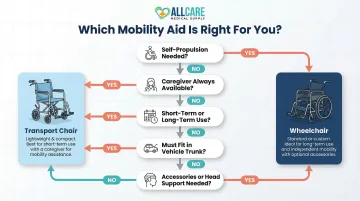
Ask yourself these questions:
- Self-propulsion needed? Yes → wheelchair. No → transport chair.
- Caregiver always available? No → wheelchair is required.
- Short-term or long-term use? Short-term → transport chair; long-term → wheelchair.
- Must fit in a standard vehicle trunk? Yes → prioritize a transport chair's lighter weight.
- Accessories or head/neck support needed? Yes → wheelchair with customization options.
Conclusion
Transport chairs and wheelchairs are not interchangeable — they are purpose-built for different users and situations. Choosing correctly means better safety, comfort, and independence for the user, and less physical strain for caregivers.
The right choice becomes especially clear once you know the context of use:
- Transport chair — short trips, caregiver-assisted, lightweight needs
- Manual wheelchair — independent or assisted use across varied terrain
- Power wheelchair — full-time users who need self-directed mobility
For Florida families working through this decision, use the guide above to match the device to your loved one's specific needs. If you're still unsure, a NEMT provider like AllCare Medical Transport or your healthcare professional can help you identify the safest option before your next trip.
Frequently Asked Questions
What is the difference between a transport chair and a wheelchair?
The primary difference is self-propulsion: wheelchairs have large rear wheels with hand rims so users can move independently, while transport chairs have four small wheels and must be pushed by a caregiver. Transport chairs are also lighter and designed for short-term use.
Can a transport chair be used as a regular wheelchair?
No. A transport chair can serve as a short-term mobility aid but cannot replace a regular wheelchair for users who need independence. It has no hand rims, cannot be self-propelled, and is not built for full-time use.
Can you push yourself in a transport chair?
No, a transport chair cannot be self-propelled. It is specifically designed to be pushed by a caregiver or attendant and lacks the large rear wheels and hand rims needed for independent movement.
Which is easier to push, a wheelchair or a transport chair?
Transport chairs are generally easier to push because they are lighter and more compact (47-49% lighter than wheelchairs), reducing physical strain on the caregiver — making them a practical choice for short outings and medical appointments.
Does Medicare cover transport chairs?
Medicare may cover a transport chair if it is prescribed by a physician and deemed medically necessary. Coverage requires documentation that the beneficiary cannot self-propel a standard wheelchair and has a caregiver available to assist — confirm details through your specific plan at Medicare.gov.
When is a transport chair a better choice than a wheelchair for medical appointments?
A transport chair is often the better fit for medical appointments when a caregiver is present, the trip is short, and easy vehicle loading is a priority. A NEMT provider equipped for both chair types can handle loading, securing, and unloading — removing that burden from the caregiver entirely.